
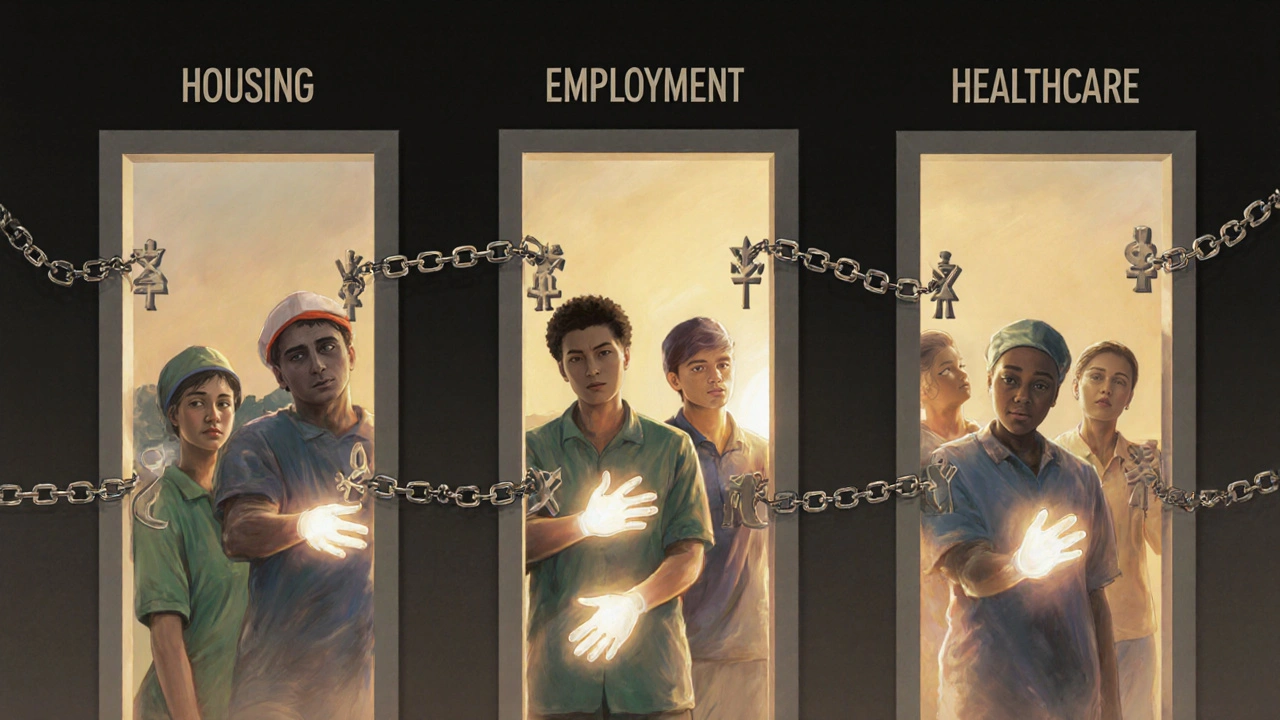
Every day, sex workers in Australia and around the world face being turned away from apartments, fired from jobs, or denied medical care-not because of what they do, but because of who they are. If you’ve ever been told you can’t rent a place because your ID shows you work in adult services, or been refused service at a clinic because the receptionist assumed you were "a risk," you’re not alone. These aren’t rare incidents. They’re systemic. And in most places, they’re still legal.
What the Law Actually Says (and Doesn’t Say)
In Australia, sex work is decriminalized in New South Wales, Victoria, and the Australian Capital Territory. That means the act of selling sex isn’t a crime. But decriminalization doesn’t automatically mean protection from discrimination. There’s no federal law that explicitly bans discrimination against sex workers in housing, employment, or public services. That means landlords, employers, and service providers can legally refuse you based on your occupation-even if your work is legal.
Compare that to other protected categories. Under the Sex Discrimination Act 1984, you can’t be denied a job because you’re a woman, gay, or have a disability. But if you’re a sex worker? No such protection. Courts have consistently ruled that occupation-based discrimination isn’t covered unless it’s tied to a protected attribute like gender or race. So if a landlord says, "I don’t rent to people in the sex industry," that’s not illegal under current federal law.
Housing: Locked Out Before You Even Apply
One of the most common barriers sex workers face is housing. Real estate agents ask invasive questions: "What do you do for work?" If you answer honestly, you’re often told the unit is "already taken." Some landlords use third-party screening services that flag certain occupations as "high risk," even if there’s no criminal record or financial issue.
In 2023, a study by the Scarlet Alliance found that 68% of sex workers in Australia had been denied housing because of their work. One woman in Perth applied for three apartments over six months. Each time, she was asked about her job during the interview. Two landlords said they "preferred tenants who didn’t have late-night clients." The third said, "I don’t want people like you in my building."
There’s no legal recourse. Even if you have perfect credit, steady income, and references, your job title can be enough to get you rejected. Some sex workers use fake job titles on applications-"freelance consultant," "remote admin assistant"-just to get a foot in the door. It’s not ideal. But it’s often the only way.
Employment: The Invisible Wall
Outside of sex work, many people hold multiple jobs. A nurse might drive for Uber. A teacher might sell art online. But if you’re a sex worker, even part-time, you’re often forced to hide it. Why? Because employers don’t just discriminate-they fire.
A 2024 report from the Australian Human Rights Commission documented 17 cases where people lost their jobs after their sex work became known. One nurse in Melbourne was terminated after a patient recognized her from an escort website. The hospital claimed it was a "breach of professional conduct," even though she never used work-related devices or posted during work hours. No union backed her. No legal aid took the case.
Even in non-traditional workplaces, the stigma follows. A graphic designer in Brisbane was told her portfolio was "too risky" for a client project because she’d previously worked in adult entertainment. A delivery driver in Adelaide was fired after a customer complained about "the person who used to do webcam shows." In both cases, the employers didn’t violate any law-they just used their power to remove someone they deemed "unacceptable."

Access to Services: When You Need Help, You’re Turned Away
Hospitals, banks, and government offices are supposed to be neutral spaces. But for sex workers, they’re often hostile. A woman in Sydney was denied a bank loan because the officer asked if she had "a stable income source"-then refused to process her application after she mentioned she worked independently in adult services.
Health clinics are worse. A trans sex worker in Melbourne went to a sexual health clinic for an STI test. The nurse asked if she was "still doing that" and then refused to give her a full exam, saying, "I don’t feel comfortable treating people like you." She had to drive 80 kilometers to find a clinic that wouldn’t judge her.
Even when services are technically available, the experience is so degrading that many avoid them entirely. A 2025 survey by the Australian Sex Workers’ Network showed that 41% of respondents had delayed or skipped medical care because they feared discrimination. That’s not just an inconvenience-it’s a public health risk.
Where Protections Do Exist (And How to Use Them)
There are some glimmers of progress. In Victoria, the Equal Opportunity Act 2010 includes a provision that prohibits discrimination based on "lawful sexual activity." That’s a rare win. It means if you’re a sex worker in Victoria and you’re denied housing or service because of your work, you can file a complaint with the Victorian Equal Opportunity and Human Rights Commission.
But that’s only in one state. In other parts of Australia, you’re on your own. Some organizations have stepped in to fill the gap. Groups like Scarlet Alliance and the Australian Sex Workers’ Network offer legal advice and advocacy. They help people document discrimination, write formal complaints, and connect with sympathetic landlords or employers.
There’s also a growing movement to include "sex work" as a protected category under anti-discrimination laws. Advocates point to New Zealand, where the Prostitution Reform Act 2003 explicitly protects sex workers from discrimination in employment and services. Canada and parts of Germany have similar protections. Australia is lagging.
What You Can Do Right Now
If you’re a sex worker facing discrimination, here’s what actually works:
- Document everything. Save emails, texts, and notes from conversations. Write down dates, names, and what was said. Even if you don’t plan to sue, this builds a paper trail.
- Know your state laws. If you’re in Victoria, you have legal rights. In other states, you may not-but you can still report to human rights commissions. They can investigate patterns, even if they can’t force a landlord to rent to you.
- Use anonymous services. Some banks and clinics allow you to use a pseudonym or PO box. Ask. Many don’t advertise this, but it’s possible.
- Connect with peer networks. Organizations like Scarlet Alliance and the Red Umbrella Fund offer resources, legal referrals, and emotional support. You’re not alone.
And if you’re not a sex worker but want to help? Speak up. If you’re a landlord, don’t ask about occupation unless it’s legally required. If you’re an employer, don’t fire someone because of their side hustle. If you’re a service provider, treat everyone with dignity. Change doesn’t come from laws alone-it comes from people refusing to look away.
Why This Matters Beyond Sex Work
This isn’t just about sex workers. It’s about who gets to be seen as worthy of basic rights. If you can be denied housing because of your job, then no job is truly safe. If a nurse can be fired for having a side gig, then no one’s privacy is protected. If a clinic can refuse care because of stigma, then healthcare isn’t a right-it’s a privilege.
Protecting sex workers isn’t about endorsing a lifestyle. It’s about upholding the principle that everyone deserves fair access to housing, work, and healthcare-even if society doesn’t like what they do.
Can I be legally denied housing because I’m a sex worker in Australia?
Yes, in most parts of Australia. While sex work is decriminalized in some states, there’s no federal or state law that explicitly prohibits housing discrimination based on occupation. Landlords can legally refuse to rent to you if they know you work in adult services. Only Victoria has a specific legal protection under the Equal Opportunity Act 2010.
Can I sue an employer for firing me because I’m a sex worker?
In most cases, no. Australian anti-discrimination laws protect attributes like gender, race, disability, and sexuality-but not occupation. Unless your firing was tied to one of those protected attributes (e.g., you’re a woman being targeted because you’re a female sex worker), there’s no legal basis for a discrimination claim. You may have grounds for unfair dismissal if you were employed for more than 6 months and the process was unjust, but not because of your job.
Are there any clinics or banks that won’t discriminate against sex workers?
Yes, but you have to ask. Some community health centers, like those run by Scarlet Alliance partners, explicitly welcome sex workers. A few banks allow you to use a pseudonym or PO box for applications. It’s not advertised, so calling ahead and asking if they serve clients in the sex industry can save you from a humiliating experience. Organizations like the Australian Sex Workers’ Network maintain updated lists of inclusive providers.
What should I do if I’m denied service at a hospital or clinic?
Document the incident immediately-note the date, time, staff name, and what was said. Contact your local human rights commission or a sex worker advocacy group like Scarlet Alliance. They can help you file a complaint and connect you with a provider who won’t judge you. Your health matters, and no one has the right to deny you care based on stigma.
Is there any progress being made to change these laws?
Yes. Advocacy groups in NSW and Victoria are pushing to include "sex work" as a protected category under anti-discrimination laws. A 2024 parliamentary inquiry in NSW recommended this change, but it hasn’t been passed yet. New Zealand and parts of Canada have already done it successfully. The movement is growing, but it’s slow. Public pressure and personal stories are the most powerful tools right now.
What Comes Next
If you’re a sex worker, your survival shouldn’t depend on hiding who you are. If you’re an ally, your silence isn’t neutral-it’s complicity. The next step isn’t waiting for legislation. It’s refusing to participate in the system that pushes people out. Rent to someone who works in adult services. Hire someone without asking about their side hustle. Treat every person at the counter with respect. These small acts add up. And they’re the only thing that’s ever changed the law before.