
Every year, over 3 million older adults in the U.S. alone end up in the emergency room because of a fall. Many of them aren’t just at home-they’re being moved between hospitals, clinics, or care facilities by medical escort services. These teams don’t just drive people from point A to point B. They’re trained to prevent falls before they happen. And when you’re dealing with someone who’s frail, dizzy, or on multiple medications, even a small misstep can turn into a life-changing injury.
What Makes a Patient High Risk for Falls?
A fall risk isn’t just about age. It’s a mix of physical, cognitive, and environmental factors. Someone with Parkinson’s might have balance issues. A patient recovering from hip surgery could be weak on one side. Diabetic neuropathy can make feet feel numb, so they don’t feel the edge of a step. Medications like sedatives, blood pressure drugs, or antipsychotics can cause dizziness or low blood pressure when standing up.
Medical escort teams assess each patient before transport. They check for:
- History of previous falls in the last 6 months
- Use of walkers, canes, or wheelchairs
- Confusion or disorientation
- Vision problems (cataracts, glaucoma)
- Footwear (slippery soles, no back strap)
- Medication changes in the last 48 hours
If any of these are present, the escort team treats the trip as a high-risk transfer. No exceptions.
How Medical Escorts Prevent Falls During Transport
It’s not enough to say, ‘Be careful.’ These teams follow strict, repeatable protocols. Here’s how they do it:
- Pre-transport assessment - Before the patient even leaves their room, the escort checks their mobility level and mental state. If the patient is confused or agitated, they delay the transfer until sedation wears off or a nurse stabilizes them.
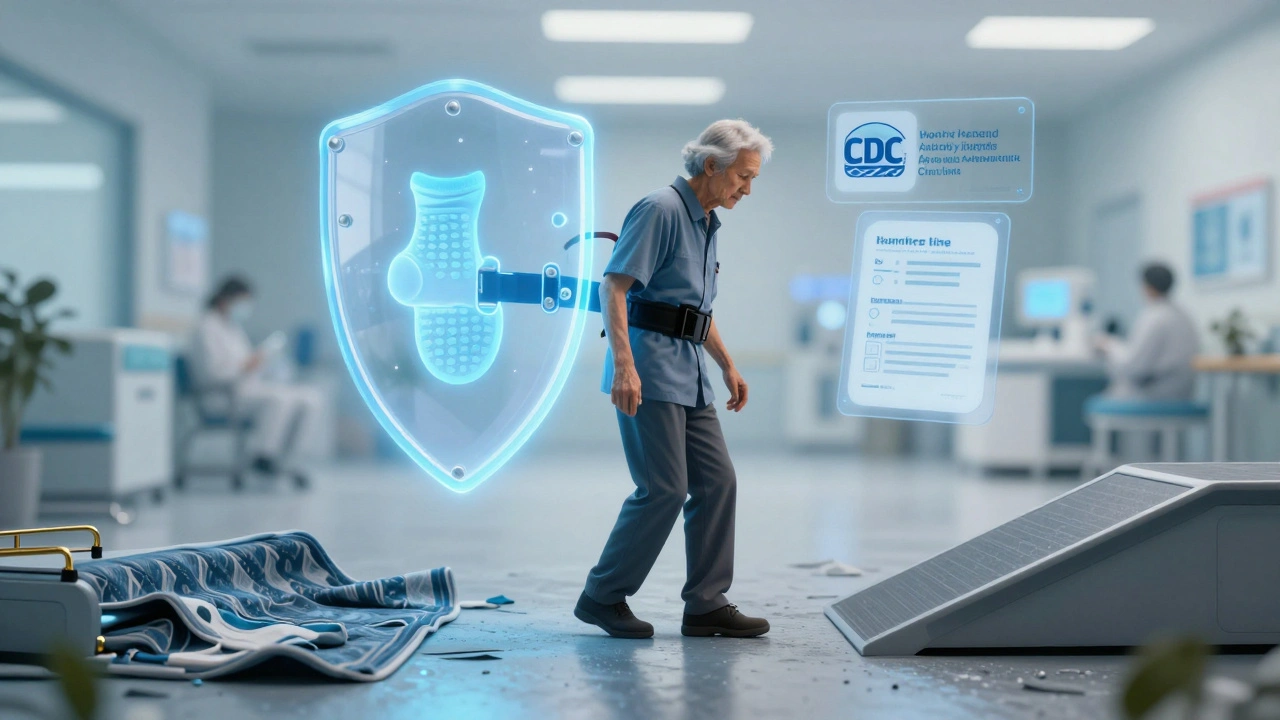
- Proper equipment use - Every vehicle is equipped with a transfer board, gait belt, and non-slip mats. The escort never lifts a patient alone. Two-person lifts are standard for anyone who can’t bear weight. Even if the patient says they can walk, the escort insists on using the gait belt. It’s not about trust-it’s about physics. One slip, and both patient and escort could go down.
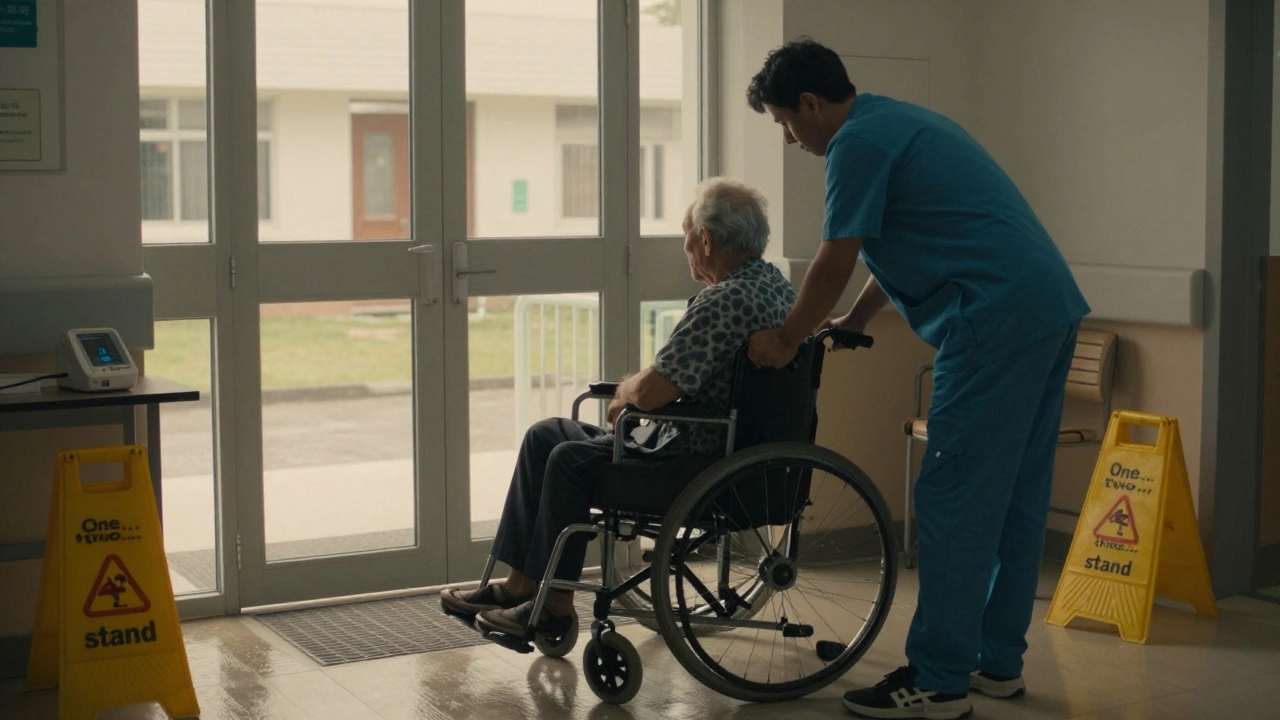
- Environmental control - Escorts inspect the path before moving the patient. Is the hallway wet? Are there loose rugs? Is the doorway wide enough for the wheelchair? If the exit ramp at the clinic is steep, they request a different entrance. No one gets rushed.
- Slow, controlled movement - Standing up takes time. A patient on blood pressure meds might need 30 seconds to adjust. Escorts don’t say, ‘Come on, let’s go.’ They say, ‘Take your time. I’ve got you.’ They count out loud: ‘One… two… three… stand.’
- Continuous supervision - Even if the patient is sitting in the car, the escort stays within arm’s reach until they’re fully seated and belted. No one is left alone in a wheelchair near stairs. Not for a second.
These steps aren’t optional. They’re part of the service agreement. If a patient falls during transport because a protocol wasn’t followed, the service provider is liable.
What Happens During Transfers Between Facilities?
Transfers between hospitals, nursing homes, or rehab centers are the most dangerous moments. That’s when patients are most likely to fall-because they’re tired, disoriented, and surrounded by unfamiliar people.
Medical escort teams use a standardized handoff checklist:
- Confirm patient identity with two identifiers (name and date of birth)
- Verify current mobility status with the sending nurse
- Review recent medication changes
- Check for new bruises, swelling, or signs of recent fall
- Document the transfer time and condition
- Hand over the gait belt and any assistive devices
They don’t just drop the patient off and leave. They wait until the receiving staff confirms they’ve taken over. If the nurse is busy, the escort waits. They’ve seen too many patients slip while staff are distracted.
Training and Certification for Medical Escorts
Not every driver who says they offer ‘medical transport’ is qualified. Legitimate medical escort services require:
- CPR and first aid certification (updated annually)
- Specialized fall prevention training (based on CDC guidelines)
- Hands-on practice with transfer boards, slide sheets, and lift devices
- Background checks and drug screening
- Annual re-certification in patient handling
Some services go further. In Australia and Canada, top providers train staff in the Johns Hopkins Fall Risk Assessment Tool, which scores patients based on 10 clinical factors. The best teams don’t just follow rules-they understand why each rule exists.
For example: Why do they insist on non-slip socks? Because 27% of falls in care facilities happen on smooth flooring. Why do they avoid rushing? Because orthostatic hypotension (a sudden drop in blood pressure when standing) causes 40% of falls in elderly patients on meds.
What Families Should Look For When Choosing a Service
If you’re hiring a medical escort for a loved one, don’t just pick the cheapest option. Ask these questions:
- Do you use gait belts and two-person lifts for all mobility-impaired patients?
- Do you follow CDC or WHO fall prevention protocols?
- Are your staff certified in patient handling?
- Do you provide a written transfer report after each trip?
- What’s your policy if a patient falls during transport?
Reputable services will have a printed protocol booklet. They’ll show you their training records. If they hesitate or say, ‘We just drive people,’ walk away. That’s not a medical escort-that’s a taxi with a stretcher.
Real-Life Example: How a Simple Protocol Saved a Life
In Perth last year, a 78-year-old woman with dementia was being moved from a hospital to a memory care unit. Her family insisted she could walk. The escort team noticed her shoes had smooth rubber soles and no heel grip. They asked the nurse for a pair of non-slip socks. The nurse said no-they didn’t have any.
The escort team called their supervisor. Within 20 minutes, a delivery arrived with medical-grade non-slip socks. The patient was fitted, escorted slowly, and transferred without incident. Later, the hospital’s safety officer reviewed the case. They changed their policy: all patients transferred by medical escort must wear non-slip footwear or socks, provided by the service if needed.
That’s how good protocols become standards.
Why This Matters More Than You Think
Falls aren’t just accidents. They’re preventable events-and they cost the healthcare system over $50 billion a year in the U.S. alone. Most of those costs come from fractures, head injuries, and long-term care after a fall. But behind every number is a person who lost their independence.
Medical escort services don’t just move people. They protect dignity. They give families peace of mind. And they do it by treating every transfer like a high-stakes operation-because it is.
If you’re responsible for arranging transport for someone with mobility issues, remember: safety isn’t an extra. It’s the baseline. And the right medical escort service won’t just get them there-they’ll get them there without a single stumble.