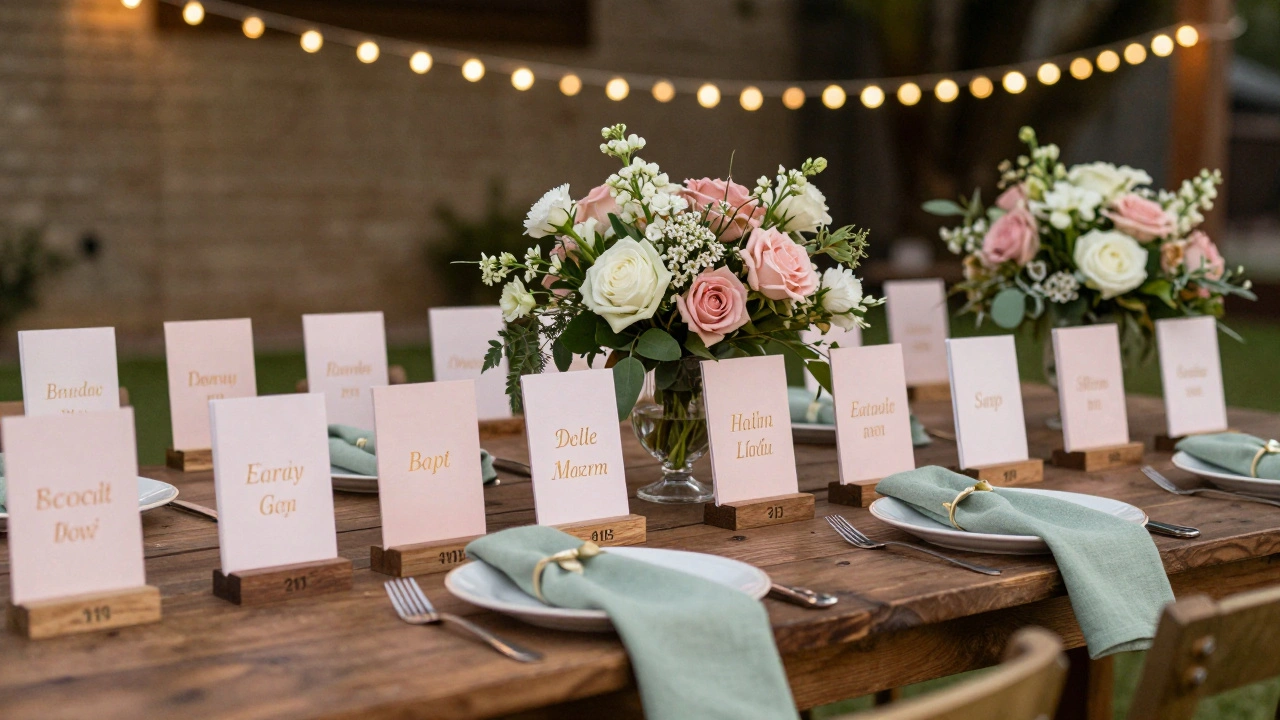
Getting your wedding escort cards, place settings, and menus to work together isn’t just about looking pretty-it’s about making sure your guests actually find their seats without panic, and know what they’re eating before they sit down. Too many weddings fail here. Guests wander, tables get mixed up, and someone ends up with a vegan plate at a steak dinner. It doesn’t have to be that way.
Start with the guest list and seating plan
You can’t design escort cards or menus without knowing who’s coming and where they’re sitting. Start with a final headcount. Confirm RSVPs. Group people by relationships-family, friends, coworkers, couples. Don’t just seat everyone alphabetically. Think about who needs to be near the dance floor, who might need a quiet corner, or who should be seated with someone who’ll help them feel welcome.
Once you have your seating chart, assign each guest to a table. Label tables clearly: Table 1, Table 2, or better yet, use names like ‘Riverside,’ ‘Sunset,’ or ‘Bridal Party.’ This makes the escort cards feel less like a classroom assignment and more like part of the theme.
Design escort cards that match your place settings
Your escort cards are the first thing guests interact with after signing in. They need to be easy to read, easy to find, and visually connected to the rest of your table setup. If your table numbers are printed on wooden slices with gold lettering, your escort cards should follow the same style. Same font. Same material. Same color palette.
Don’t use tiny handwriting. No one wants to squint under string lights. Use at least 14-point font. Print names clearly. Include table names or numbers right on the card-not just on the display board. That way, if someone grabs the wrong card, they still know where to go.
Place the cards on a simple stand or tray near the entrance. Don’t bury them behind a stack of programs or a cake display. Make them impossible to miss. A chalkboard with calligraphy works. So does a wooden frame with mini clothespins. Keep it clean. Keep it visible.
Menus should echo the escort cards, not fight them
Your menu isn’t just a list of food-it’s part of the guest experience. If your escort cards are rustic and handmade, your menus should feel the same. If your wedding is sleek and modern, go with minimalist typography on crisp white cardstock.
Include the table name or number on each menu. This ties the menu directly to the escort card. If a guest picks up their escort card that says ‘Table Willow,’ their menu should say ‘Table Willow’ at the top. It creates continuity. It reduces confusion.
Don’t list every ingredient. Just give the dish name and a short descriptor. Example: Seared salmon with lemon-dill quinoa and roasted asparagus. That’s enough. No one needs to know if the butter is cultured or the herbs are organic unless you’re running a food blog.
Use color coding to link everything
One of the easiest ways to tie escort cards, place settings, and menus together is color. Assign each table a color-soft sage, dusty rose, navy blue-and use that same color on:
- The escort card background or border
- The table number sign
- The menu paper or ribbon
- The napkin fold or plate liner
When guests see that same shade on their card and their plate, they instantly know they’re in the right place. It’s visual shorthand. No reading required.
Pro tip: Use the same color on your table centerpiece. A small vase with the same-toned flowers reinforces the connection. It’s subtle, but it works.
Print menus at the same time as escort cards
Don’t wait until the week before to order your menus. Order them at the same time as your escort cards. That way, you get the same printer, the same paper stock, and the same color calibration. If your escort cards are printed on textured cotton paper, your menus should be too. If you’re using foil stamping on the cards, use it on the menus as well.
This isn’t about being fancy. It’s about consistency. Guests notice when things feel mismatched-even if they can’t say why. Matching materials create a sense of polish and care.
Place settings should reflect the menu
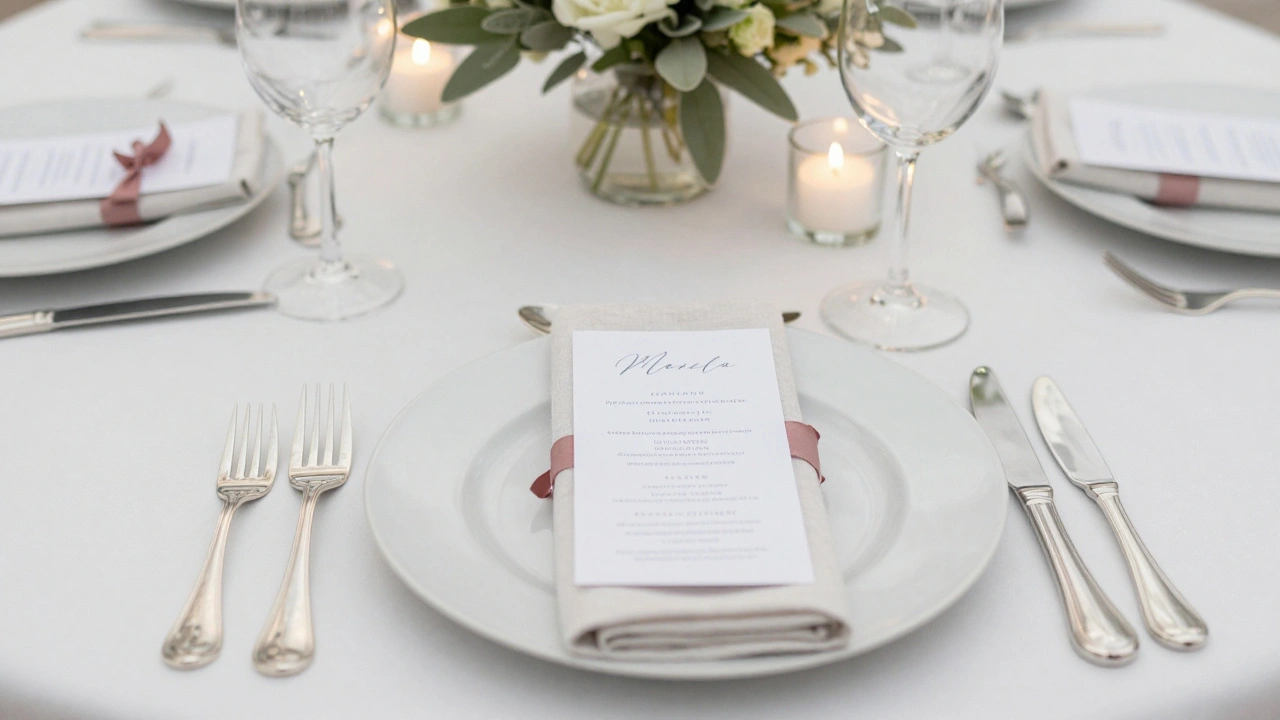
Every fork, knife, and glass should match the food being served. If you’re serving a three-course meal, you need three sets of silverware. Don’t guess. Count them. Lay them out in the order they’ll be used, from the outside in.
Use napkin rings to hold the menu. Fold the menu into a triangle and slip it into a linen napkin tied with a ribbon that matches your table color. It’s elegant, practical, and keeps the menu from sliding off the plate.
If you’re using chargers or underplates, make sure they’re the right size for your tablecloth and centerpiece. A huge charger under a tiny vase looks off. A small charger under a tall floral arrangement looks unbalanced. Test your setup with real plates before the big day.
Test your setup with a mock-up
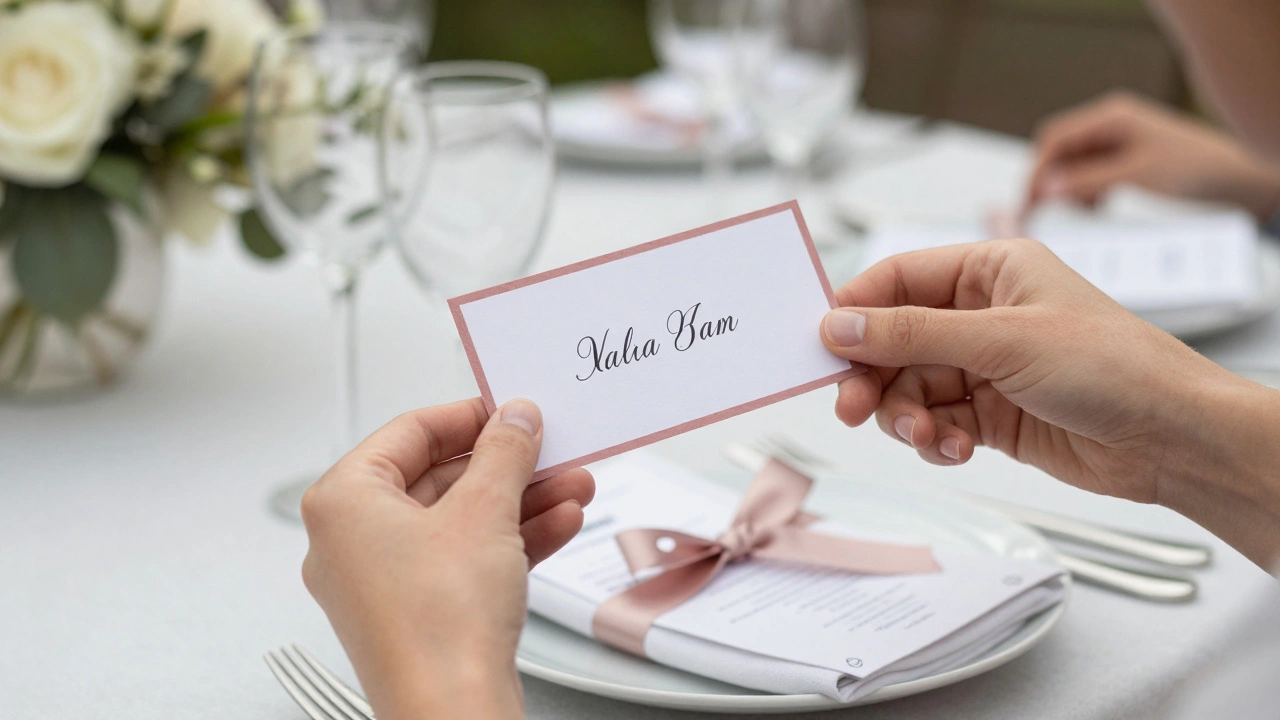
Before the wedding, set up one full table exactly how you plan to do it on the day. Put down the tablecloth. Add the charger. Lay out the silverware. Place the napkin with the menu tucked inside. Stick a printed escort card on a small stand nearby. Walk through the guest experience.
Ask yourself: Can I find my table from 10 feet away? Do I know what I’m eating without reading the menu twice? Does everything feel like it belongs together?
If the answer is no, tweak it. Move the escort card stand. Change the font size. Swap the napkin color. Fix it now. Not on the day.
Handle last-minute changes smoothly
People cancel. Last-minute guests show up. Kids get sick. You’ll have changes. Always have 5-10 extra escort cards and menus on hand. Keep them in a sealed envelope labeled ‘Backup.’
If someone’s name is misspelled on their card, don’t panic. Have a fine-tip gold pen ready. Write the correction neatly on the back. Or slip a new card over the old one with a tiny piece of double-sided tape. No one will notice.
Keep a printed copy of your seating chart in your clutch or with your wedding planner. If someone asks, ‘Where’s Table Luna?’ you can point them to the right spot without fumbling.
Why this matters more than you think
This isn’t just about aesthetics. It’s about reducing stress-for your guests and for you. When everything flows together, people relax. They enjoy the food. They chat. They dance. They don’t spend 20 minutes trying to figure out if they’re at ‘Table 7’ or ‘Table Willow.’
A well-coordinated system shows you’ve thought about the details. It says, ‘I cared enough to make this easy for you.’ And that’s the kind of wedding people remember-not the cake, not the flowers, but how they felt walking in and knowing exactly where to go.