
Being stopped by police as a sex worker isn’t uncommon-but that doesn’t mean you have to accept being treated unfairly. In Australia, and in many places around the world, sex workers have the same basic legal rights as anyone else. Yet too often, those rights are ignored, misunderstood, or deliberately overlooked. If you’ve ever been pulled over, questioned on the street, or had your belongings searched without clear reason, you’re not alone. And you’re not without recourse.
You don’t have to answer questions
Police can ask you questions. That’s their job. But you don’t have to answer them. Not a single one. You’re not required to tell them where you’re going, who you’re with, or what you were doing. Saying “I’d prefer not to answer” or “I’m exercising my right to remain silent” is enough. You don’t need to explain yourself. You don’t need to sound polite. You don’t need to apologize for not talking. Silence is legal. Silence is protection.In Western Australia, where I live, the Police and Criminal Evidence Act doesn’t force anyone to speak during a stop. Even if an officer says, “Just tell me what’s going on,” you can still say nothing. That’s not obstruction. That’s your right. Officers might get annoyed. They might try to pressure you. Don’t let that shake you. Your safety comes before their comfort.
Consent is required for searches
A police officer can’t just reach into your bag, pocket, or car without legal justification. They need either your consent, a warrant, or reasonable suspicion that you’re carrying something illegal. “Reasonable suspicion” means more than just looking nervous or being in a certain area. It means specific, observable facts-like seeing a drug packet in your hand or hearing a confirmed report of a crime.If an officer says, “I’m going to search you,” ask: “Do I have your consent?” If they say no, then ask: “What’s the legal basis for this search?” Write down their answer. If they can’t name a law or give a clear reason, you’re within your rights to refuse. You can say: “I do not consent to this search.” Say it clearly. Say it calmly. Say it out loud.
Some officers will try to trick you into giving consent. “We just need to check your phone real quick.” “This won’t take a second.” Don’t fall for it. A quick search is still a search. And if they take your phone, your money, or your ID without legal grounds, that’s unlawful seizure. You can file a complaint later. But you can’t undo the violation if you gave in in the moment.
Body searches are not routine
Strip searches or intimate searches are not something police can do on a whim. In Australia, these require authorization from a senior officer, must be conducted by someone of the same gender as you, and must happen in private. If you’re being asked to remove clothing in a public alley or a parked patrol car, that’s not legal. That’s humiliation dressed up as procedure.If you’re subjected to a body search without proper authorization, note the officer’s badge number, their name if given, and the time and location. If possible, record it on your phone-just keep it in your pocket. You don’t need to show them you’re recording. In most Australian states, it’s legal to record police in public as long as you’re not interfering.
And if they threaten to arrest you for refusing a body search? That’s not how it works. You can’t be arrested just for refusing an unlawful search. Arrest requires probable cause of a crime. Not suspicion. Not discomfort. Not bias.
What you carry matters-but not always the way they think
Police often assume that condoms, lube, or a stack of cash are “evidence” of sex work. That’s not true. In Australia, sex work itself is legal in most states, including Western Australia. Possessing condoms or money doesn’t prove you broke any law. You can carry those things for any reason. You can be a nurse, a student, a dancer, or a mother. None of those roles make your belongings illegal.Some officers still use outdated laws to justify seizures. They’ll say, “We’re confiscating this because it’s used for illegal activity.” But if sex work is legal where you are, then those items aren’t contraband. If they take your things anyway, demand a receipt. If they refuse, write down the details. You can file a formal complaint with the Police Ombudsman or the Human Rights Commission. You’re not asking for permission-you’re documenting a violation.

Arrests happen-but they’re not inevitable
If you’re arrested, stay calm. Don’t argue. Don’t resist. That’s not because you’re guilty. It’s because resisting makes things worse. Say clearly: “I am not consenting to this arrest.” Then ask: “What am I being arrested for?” They must tell you. If they say, “For suspected prostitution,” that’s not enough. In WA, soliciting in public is illegal-but being a sex worker is not. They need to prove you were actively soliciting someone at that moment. If you were just waiting in your car, that’s not solicitation.Once arrested, you have the right to a lawyer. Call one. If you can’t afford one, ask for Legal Aid. Don’t let them pressure you into signing anything. Don’t let them tell you it’s “easier” if you admit something. That’s not easier. That’s a trap.
Know your local laws
Sex work laws vary wildly-even between cities. In Perth, indoor sex work is legal and regulated. Street-based work is restricted in certain zones, but not criminalized outright. In Sydney, it’s mostly decriminalized. In Queensland, some forms are still illegal. Don’t assume what’s true in one place is true in another.Know your local zoning laws. Know which streets or parks have restrictions. Know where you can legally work. But also know: even if you’re in a restricted zone, police still need probable cause to stop you. Being in a restricted area isn’t a crime. It’s a violation of local council rules-and that’s not a police matter unless you’re causing a public nuisance.
Document everything
After any encounter, write down what happened. Date. Time. Location. Officer’s badge number. What was said. What was taken. What was threatened. Keep a copy. Save it in the cloud. Send it to a trusted friend. Don’t rely on memory. Police reports can be inaccurate. Your record is your evidence.Apps like SafeWalk or Red Umbrella let you log encounters anonymously. Some even alert a support network if you don’t check in. Use them. They exist because people like you needed them.
You’re not alone
Organizations like the Western Australian Sex Workers Outreach Project and Scarlet Alliance offer free legal advice, peer support, and advocacy. They’ve helped sex workers fight unlawful searches, reclaim seized property, and challenge biased policing. You don’t have to handle this alone.Many sex workers have successfully sued police departments for unlawful detention and harassment. Cases like Smith v. Victoria Police in 2023 set a precedent: officers who target sex workers based on appearance or stereotype can be held accountable. You have standing. You have rights. You have power.
What to do if you’re targeted repeatedly
If you’re being stopped over and over-especially if it’s always the same officer or the same patrol car-keep a log. Note patterns. Are you only stopped after dark? Are you targeted more than others in the same area? Are you asked for ID when others aren’t?That’s profiling. And profiling is illegal. You can file a formal complaint with the state’s police watchdog. You can ask for a review of the officer’s conduct. You can join a collective action with other sex workers. You don’t need to be loud to be effective. You just need to be consistent.
Carry a rights card
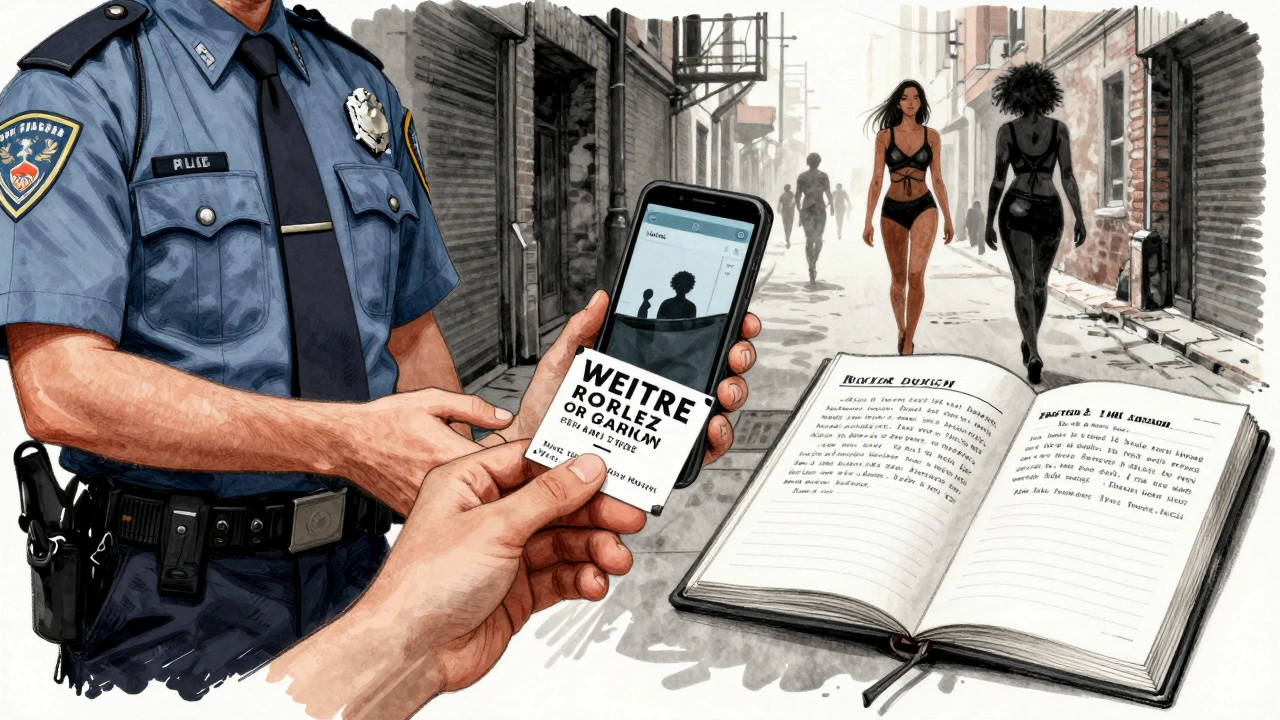
Print out a simple card with your rights in plain text. Keep it in your wallet or phone case. Here’s what it should say:- I do not consent to a search without a warrant or legal reason.
- I have the right to remain silent.
- I have the right to ask why I’m being stopped.
- I have the right to refuse a body search unless properly authorized.
- I have the right to legal representation if arrested.
Hand it to them if they get aggressive. It shifts the power. It reminds them you know the law. And sometimes, that’s enough to make them back off.
It’s not about being perfect
You don’t have to be polite. You don’t have to be respectful. You don’t have to be grateful for not being arrested. You’re not asking for mercy. You’re claiming your rights. And those rights don’t disappear because of your job.Police aren’t your enemies. But they’re not your protectors either. They’re people with power-and like all power, it’s easily misused. Your job isn’t to earn their trust. Your job is to protect yourself. And you can do that without violence. Without drama. Without apology.
Know your rights. Write them down. Share them. Use them.