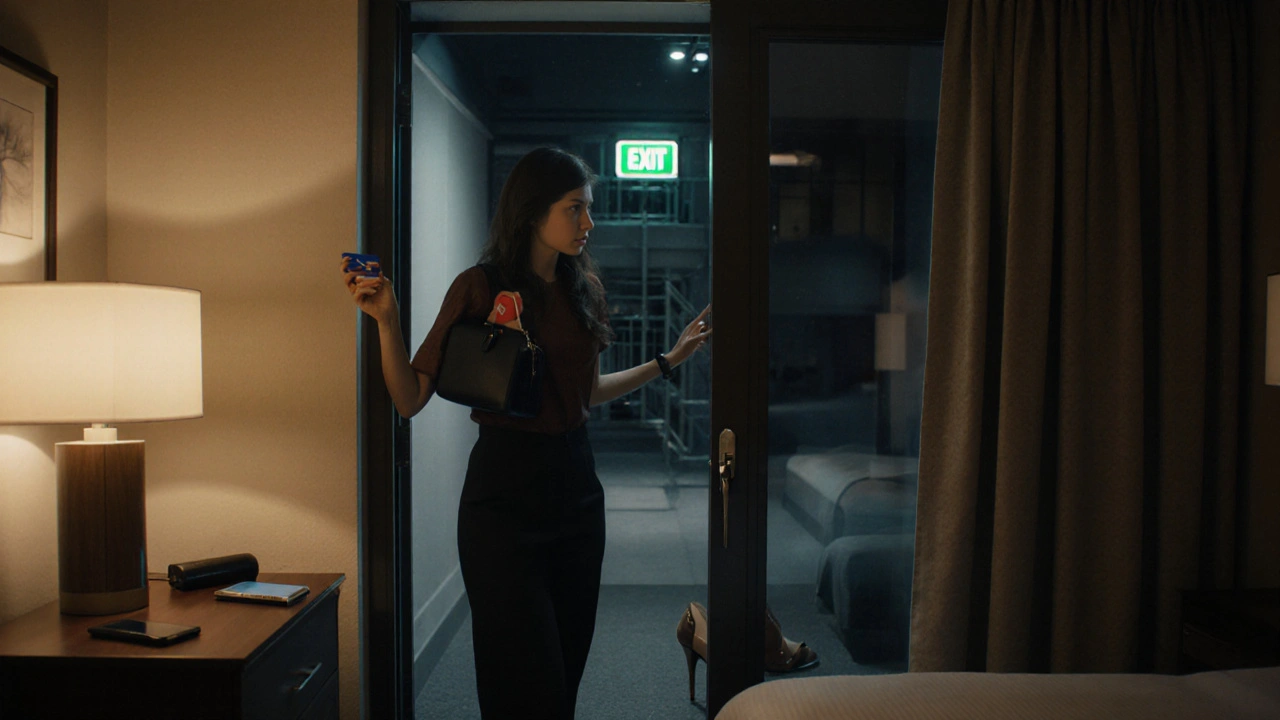
Meeting clients in person can be one of the most dangerous parts of sex work. No matter how experienced you are, the environment you choose can make the difference between a safe interaction and something that goes wrong. The right space isn’t just about privacy-it’s about control, escape, and visibility. Too many stories start with, "I thought it was fine," and end with regret. You don’t need to be paranoid. You need to be prepared.
Choose the location like you’re scouting for a mission
Hotels are common, but not all hotels are safe. Avoid places where the front desk asks too many questions or where staff seem to know too much about who comes and goes. Stick to chains with 24/7 front desks and key-card access. These places have security logs, cameras in hallways, and staff trained to ignore private guest behavior. Chain hotels like Holiday Inn Express, Hampton Inn, or Motel 6 are predictable. That’s good. Predictability means fewer surprises.
Never meet in a client’s home unless you’ve vetted them thoroughly over weeks, and even then, bring a friend to check the address beforehand. Use Google Street View to walk the block. Look for streetlights, nearby stores, bus stops, and whether the building has multiple exits. A location with no escape routes is a trap waiting to happen.
Public spaces like coffee shops or lounges can work for initial meetups, but never for services. Too many witnesses mean too many people who might call the police-or worse, a client’s partner. Use public spots only to confirm identity and vibe before moving to a controlled environment.
Control the room, not the other way around
When you enter any room, take five seconds to scan it. Door locks: do they work from the inside? Are there deadbolts or chain locks? Windows: can they be opened? Are they on the ground floor? Is there a fire escape nearby? Is there a second exit? These aren’t paranoid questions-they’re survival checks.
Bring your own lock. A simple doorstop alarm or a portable door jammer can give you minutes to escape if someone tries to force entry. These cost under $20 and fit in your purse. Some workers use smart door locks that send alerts to a trusted contact when the door is locked or unlocked. That’s not overkill-it’s insurance.
Never sit with your back to the door. Always face the entrance. That gives you visual control. If someone moves suddenly, you see it before they act. Sit near the exit. Keep your bag, phone, and keys within arm’s reach. If you’re wearing heels, leave them by the door. You’ll need to run fast.
Use tech as your silent bodyguard
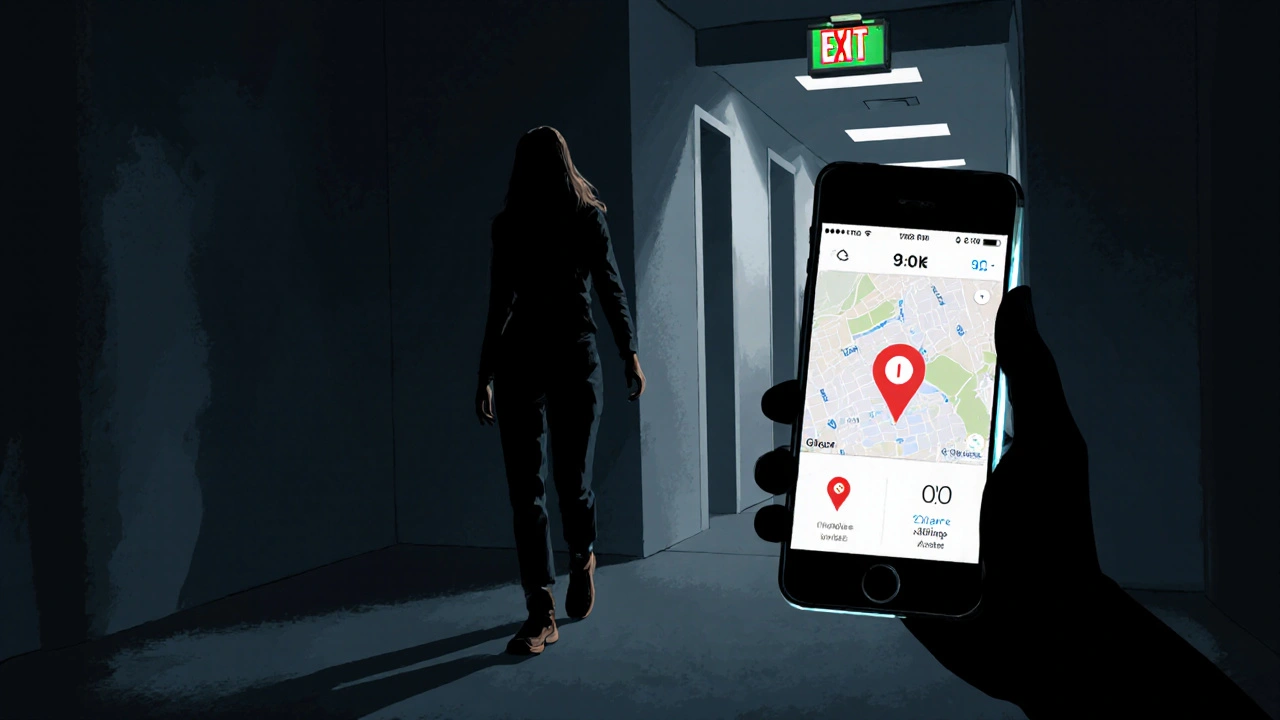
Phones aren’t just for communication-they’re your lifeline. Before every meeting, send your location and client details to a safety contact. Use apps like SafeCall, bSafe, or even a simple text thread with a friend who knows your schedule. Set a timer. If you don’t check in by the time you said you would, they call the police. No questions asked. This isn’t a suggestion. It’s mandatory.
Record audio. Most phones can do it quietly. If you feel off, turn on voice recording before the client arrives. It’s not about catching them-it’s about proving what happened if things go sideways. Some workers use apps that auto-send a distress signal if they say a specific phrase. That’s not sci-fi. It’s real, and it’s available now.
Never rely on Wi-Fi. Use your own data plan. If a client tries to cut your internet or force you to use theirs, that’s a red flag. Your phone is your weapon. Keep it charged. Carry a portable power bank. Dead battery = no help.

Know the signs of a bad environment
Some signs are obvious: a room with no windows, no lock on the door, a landlord who knocks without warning. Others are subtler. A client who insists on turning off the lights. Someone who brings a friend "just to hang out." A location that smells like smoke or chemicals. A building with no security cameras, no lobby, no staff around. These aren’t coincidences. They’re patterns.
Trust your gut. If your skin crawls, if your breath gets shallow, if you feel like you’ve stepped into a scene from a movie-leave. You don’t need to justify it. You don’t need to be polite. Walk out. Say you changed your mind. Say you’re sick. Say you forgot your wallet. It doesn’t matter what you say. What matters is that you’re out.
Some workers keep a fake emergency call on their phone. A loud, urgent ringtone that sounds like a police dispatcher. When played, it scares off predators who don’t want to get caught. It’s not a trick. It’s a tool. And it works.
Plan your exit before you even arrive
Every meeting should have a pre-planned exit strategy. Know how you’ll get out. Where’s the nearest bus stop? Can you walk to a 24-hour convenience store? Is there a gas station with a clerk who might help? Have your ride booked ahead of time. Don’t wait for the client to call you a car. That’s how people get trapped.
Keep cash on you-not just for payment, but for escape. A $20 bill for a taxi, a bus ticket, or a snack at a convenience store so you can linger and wait for your ride without looking suspicious. Carry a spare phone charger, a small flashlight, and a whistle. These aren’t accessories. They’re survival gear.
Always have a backup plan for your backup plan. If your ride doesn’t show, do you have a friend nearby? A neighbor you can knock on? A hotel front desk you can say you’re lost? Practice your escape routes mentally. Repeat them out loud before you go in. Muscle memory saves lives.
Build your safety network
You don’t have to do this alone. Connect with other sex workers. Join local groups-online or in person. Share addresses, client names, and red flags. Keep a private list of clients you won’t work with again. Don’t be shy about warning others. Silence doesn’t protect you. Community does.
Some cities have sex worker collectives that offer safety check-ins, legal aid, and emergency transport. If you’re in a major city, find them. If you’re not, start one. A WhatsApp group with three trusted people who check on you daily is better than no network at all.
Know your legal rights. In places where sex work is decriminalized or regulated, you have more protection. Even where it’s illegal, you still have rights. You can refuse service. You can call the police. You can leave. You are not obligated to stay. Repeat that to yourself before every meeting.
It’s not about fear. It’s about power.
Safety isn’t about being afraid. It’s about being in control. Every tip here isn’t meant to make you nervous-it’s meant to make you strong. You’ve already survived a lot. Now you’re learning how to walk into rooms with your head up, your eyes open, and your exit ready.
The environment doesn’t have to be your enemy. It can be your ally-if you shape it. You choose the lock. You choose the time. You choose when to leave. No one else gets to decide that for you.