
There’s no such thing as a single U.S. law on sex work. What’s legal in Nevada isn’t legal in New York. What’s a misdemeanor in California might be a felony in Texas. And in most places, just talking about it in public can get you arrested-even if no money changed hands. If you’re a sex worker, an advocate, or someone trying to understand the real landscape, this isn’t about theory. It’s about survival.
Where Is Sex Work Legal in the U.S.?
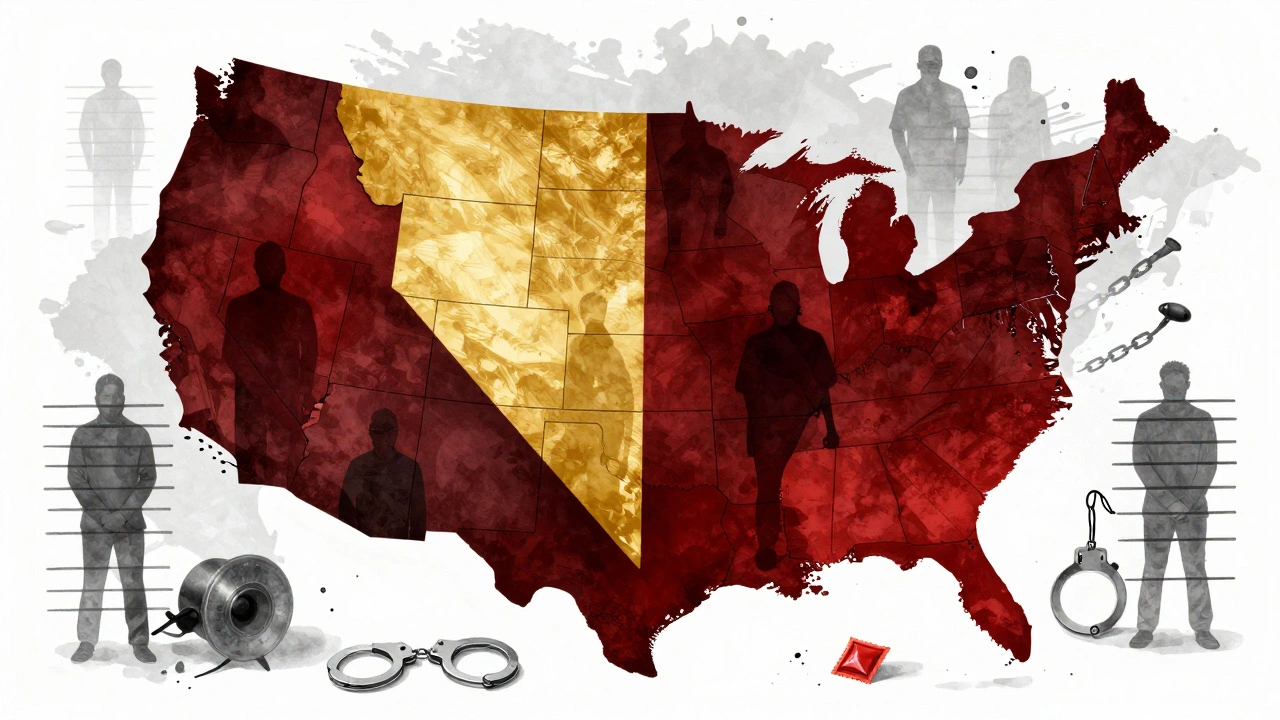
Only one state lets sex work happen openly and legally under strict rules: Nevada. But even there, it’s not as simple as it sounds. Prostitution is only legal in licensed brothels in counties with fewer than 700,000 residents. That means Las Vegas and Reno? Illegal. But in rural counties like Storey or Lyon? Legal, with health checks, background checks, and mandatory condom use. Workers must register with the county, pay fees, and follow rules that change from one county to the next.
Outside Nevada, every other state treats sex work as a crime. That includes selling sex, buying sex, and even advertising it. In some places, like New Jersey and New Mexico, recent efforts have tried to shift toward decriminalization. But as of 2025, no other state has passed laws that fully remove criminal penalties for consensual adult sex work.
How Enforcement Varies by State
Just because a law exists doesn’t mean it’s enforced the same way everywhere. In Chicago, police have used anti-trafficking laws to arrest people selling sex-even when there’s no evidence of coercion. In contrast, San Francisco’s District Attorney’s Office stopped prosecuting low-level prostitution charges in 2021, redirecting resources to support services. In Alabama, a first offense can mean jail time and mandatory HIV testing. In Oregon, possession of condoms has been used as evidence of prostitution since the 1990s, though a 2023 law finally banned that practice.
Some states have what’s called a “Nevada exception” in their laws: they criminalize street-based sex work but ignore indoor work if it’s hidden. That’s not safety-it’s selective enforcement. Workers in New York City report being targeted for being trans, Black, or Latinx, even when they’re working alone in an apartment. In rural Georgia, a woman was arrested for solicitation after asking a stranger if he wanted company for the night. No money was exchanged. No physical contact occurred. But the law didn’t care.
What “Decriminalization” Actually Means
Decriminalization isn’t legalization. It’s removing criminal penalties entirely. No arrests. No fines. No sex offender registration. That’s what New Zealand did in 2003-and what advocates in the U.S. are pushing for. In 2023, Rhode Island temporarily decriminalized indoor prostitution after a court ruling, and the state legislature chose not to reinstate the ban. That window closed in 2009, but it proved one thing: when sex work isn’t criminalized, violence drops. Studies from the University of California, Berkeley found that in Rhode Island’s brief decriminalization period, rape reports fell by 30% and sexually transmitted infections dropped by nearly 40%.
Decriminalization doesn’t mean no rules. It means rules that protect workers: health inspections, labor rights, access to banking, and protection from landlords who kick them out for being sex workers. It means police can’t use condoms as evidence. It means workers can report abuse without fear of arrest.
What’s Illegal Everywhere-And Why It Matters
Even in Nevada, some things are still crimes. Soliciting in public. Working without a license. Operating a brothel in an unapproved county. And in every state, laws against trafficking and coercion remain. But here’s the problem: those laws are often used to punish consensual adult workers. In 2024, a Texas court convicted a woman for “promoting prostitution” after she helped another woman book clients online. The woman had no control over pricing, schedules, or clients. She just helped with scheduling. She got five years.
These laws don’t target traffickers. They target people trying to survive. In Los Angeles, a 2022 audit found that 78% of people arrested for prostitution had no prior criminal record. Most were single mothers, undocumented immigrants, or survivors of abuse. They weren’t running a business. They were paying rent.
How Sex Workers Stay Safe in Illegal States
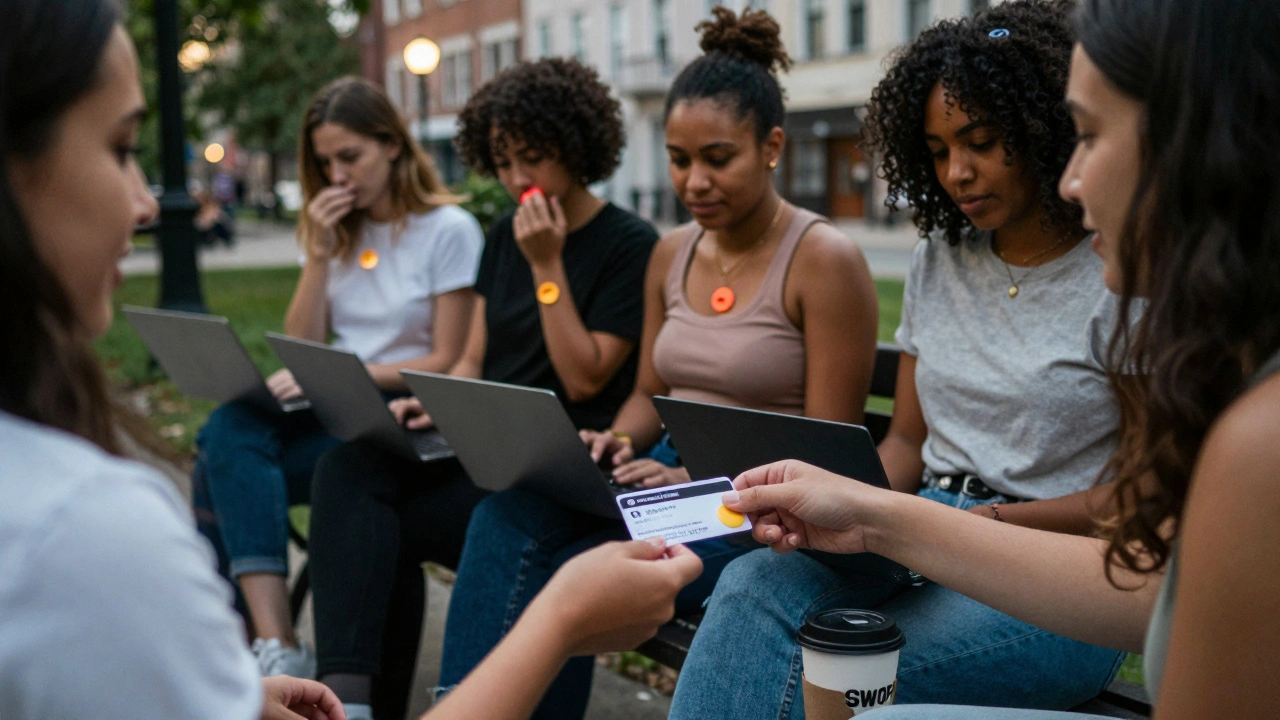
If you’re working where it’s illegal, safety isn’t about following the law-it’s about working around it. Many use apps like OnlyFans, Feeld, or private booking sites to screen clients. Others work in groups for mutual protection. Some rent short-term apartments through Airbnb or VRBO, using fake names. A growing number carry panic buttons linked to trusted contacts. In Philadelphia, a group of workers started a hotline where someone can call if they feel unsafe during a date. The caller says a code word. Someone else calls 911 and says, “There’s a medical emergency at this address.”
Banking is a nightmare. Most banks shut down accounts linked to sex work. In 2023, a worker in Florida lost $12,000 when her Chase account was frozen after a single payment from a client. Now, many use cryptocurrency or cash-only services. Some use prepaid debit cards under different names. Others rely on community funds-like the Seattle Sex Worker Solidarity Fund-that help with rent, legal fees, or emergency travel.
What Advocates Are Fighting For Right Now
Organizations like the Sex Workers Outreach Project (SWOP), the Red Umbrella Fund, and the Global Network of Sex Work Projects are pushing for three things: decriminalization, removal of criminal records, and access to social services. In 2025, bills to decriminalize sex work are active in Massachusetts, Illinois, and Maryland. None have passed yet, but they’ve shifted the conversation.
One major win came in 2024 when New York City agreed to automatically expunge all past prostitution convictions for adults. Over 25,000 records were cleared. That’s huge. But it doesn’t fix housing discrimination. Or job applications. Or the stigma that follows you for life.
Advocates also want police to stop using “quality of life” arrests to target sex workers. In Seattle, a 2023 pilot program trained officers to refer people to housing and healthcare instead of arresting them. The result? Arrests dropped by 62%. Recidivism dropped too.
What You Can Do Right Now
If you’re a worker: Document everything. Save texts, emails, receipts. Know your local laws. Carry a legal aid card. Know which clinics offer free STI testing without reporting to police. Join a peer network. You’re not alone.
If you’re an advocate: Push for decriminalization, not legalization. Legalization means regulation. Decriminalization means freedom. Support local groups. Donate to funds that help with bail or legal fees. Pressure lawmakers to remove prostitution from sex offender registries. And stop treating sex workers as victims who need saving. Many don’t want saving. They want justice.
If you’re just learning: Stop asking if it’s “right” or “wrong.” Ask: Who gets hurt by these laws? Who benefits? And what happens when we stop treating survival as a crime?
How to Find Help
There are national hotlines and local groups that offer legal aid, housing, and medical care without reporting to police:
- SWOP Behind Bars - Legal support for incarcerated sex workers
- Red Umbrella Fund - Grants for sex worker-led organizations
- Sex Worker Outreach Project (SWOP) - Peer support and advocacy
- Local HIV/STI clinics - Many offer confidential testing and care
- Legal Aid Societies - Some have dedicated units for criminal record expungement
Don’t wait until you’re arrested to reach out. These groups help before the police do.