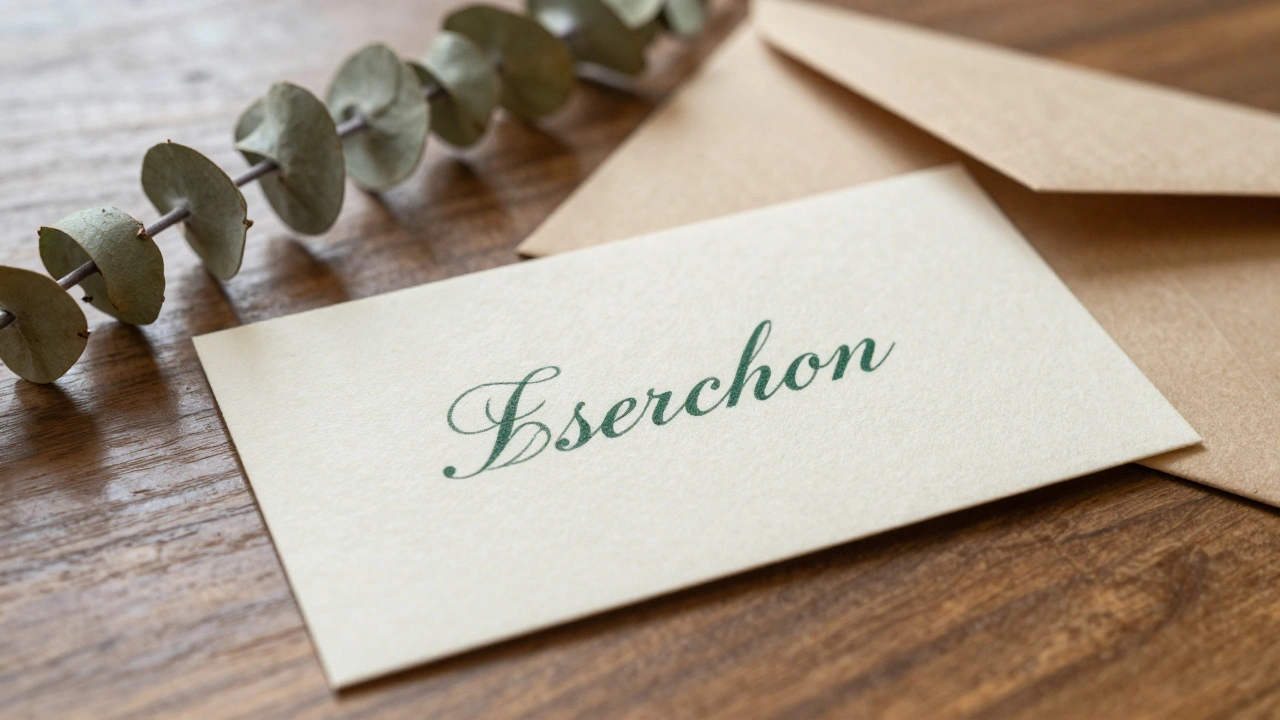
Wedding escort cards don’t have to be another piece of plastic-laminated waste. If you’re planning a wedding in 2025, you’re not just choosing names and table numbers-you’re making a statement about what kind of future you want to build. More couples are ditching the traditional cardstock and opting for options that don’t end up in landfill by Monday morning. The good news? You don’t need to sacrifice style for sustainability. Recycled paper, plantable seeds, and reusable designs are not just trends-they’re practical, beautiful, and surprisingly easy to pull off.
Why Sustainable Escort Cards Matter
Think about this: the average wedding has 100 to 200 guests. If each guest gets a single-use escort card made from virgin paper, that’s 150 pieces of paper-most of which are thrown away after the reception. Even if you use recycled paper, if it’s coated in plastic or glued to a wooden stand, it still can’t be recycled. And if you’re ordering from overseas, the carbon footprint from shipping adds up fast.
Real change starts with small details. A study by the Sustainable Wedding Alliance found that couples who switched to sustainable stationery reduced their wedding’s overall waste by 22% on average. That’s not just about paper. It’s about shifting the mindset. Your escort cards are the first thing guests interact with after the ceremony. Make them meaningful.
Recycled Paper: The Classic Choice, Done Right
Recycled paper isn’t just ‘brown and rough.’ Modern recycled paper comes in crisp whites, soft creams, and even muted pastels. The key is checking the source. Look for paper certified by the Forest Stewardship Council (FSC) or made from 100% post-consumer waste. Avoid papers labeled ‘recycled content’ without a percentage-it could mean 10% recycled, 90% new trees.
Brands like TreeZero and Cottonwood Paper make recycled stationery from cotton linters, hemp, and bamboo. These materials are naturally low-impact, require no bleaching, and feel luxurious to the touch. One couple in Perth used TreeZero’s 100% cotton paper for their escort cards, printed with soy-based ink. The cards looked like fine linen and were later composted in their backyard garden.
Pro tip: Skip the plastic sleeves and laminated finishes. They make recycling impossible. Stick to uncoated paper with simple letterpress or digital printing. If you want texture, try embossing or edge painting with natural dyes.
Reusable Escort Cards: Beyond One-Day Use
What if your escort cards didn’t just survive the wedding-they became part of it? Reusable escort cards are gaining traction because they turn a functional item into a keepsake. Here are three popular styles:
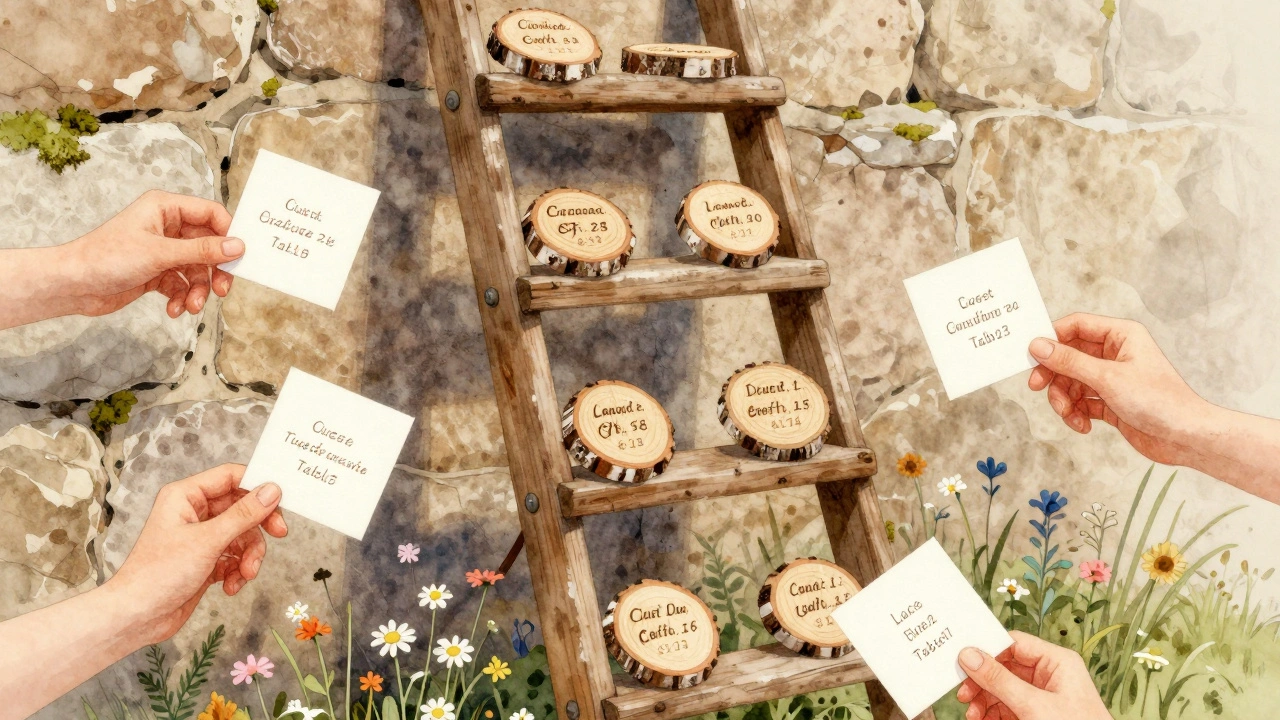
- Mini wooden signs: Laser-cut from reclaimed timber, each card has a guest’s name and table number. After the wedding, they can be hung on a wall, used as bookends, or turned into ornaments. One couple in Melbourne used birch wood slices and hung them on a vintage ladder-guests took them home as favors.
- Clay or ceramic tags: Hand-thrown pottery tags, painted with food-safe glaze, can be used as coasters, keychains, or garden markers. A Brisbane couple made 120 tags with their guests’ initials and fired them in a local kiln. Each guest got one as a memento.
- Fabric pockets: Sewn from organic cotton or linen, these small pouches hold the card inside. After the event, guests can reuse them for jewelry, toiletries, or as travel organizers. The cards themselves can be printed on seed paper (more on that below).
Reusability isn’t just about reducing waste-it’s about creating emotional value. Guests remember the card they took home, not the one they tossed.
Plantable Paper: The Gift That Grows
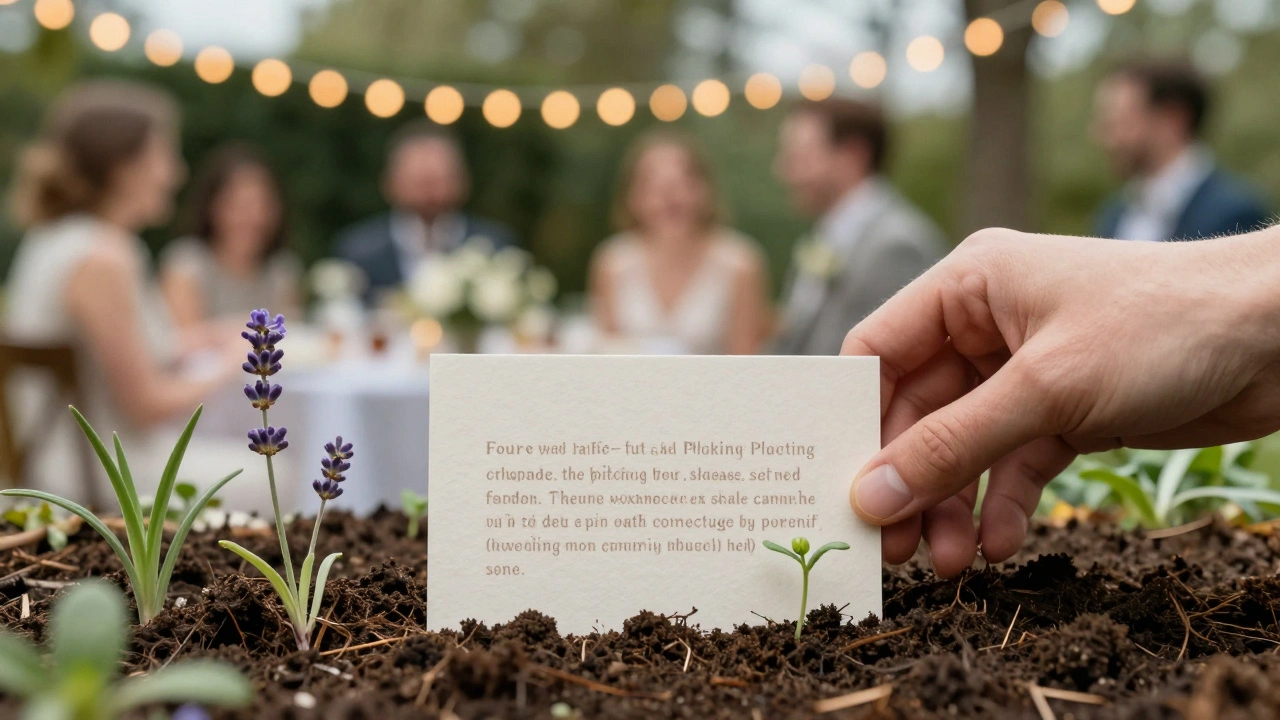
Plantable escort cards are made from seed paper-recycled paper embedded with wildflower or herb seeds. After the wedding, guests can plant them in soil, water them, and watch something grow. Popular seed mixes include lavender, poppy, and chamomile. These are native-friendly and attract pollinators.
Companies like Botanical PaperWorks and Greenvelope offer custom-printed seed paper in Australia. The paper is certified non-GMO and free of invasive species. In Perth’s climate, lavender and rosemary seeds thrive. One bride printed her guests’ names in dark green ink on a cream base, then tucked each card into a folded kraft envelope lined with dried eucalyptus.
Don’t forget to include simple planting instructions on the back: ‘Plant me! Bury 1/4 inch deep, water daily, and watch the flowers bloom.’
What to Avoid: The Hidden Waste in ‘Eco’ Cards
Not everything labeled ‘green’ is actually sustainable. Here are the biggest traps:
- Recycled paper with plastic coating: Glossy finishes prevent composting and recycling. Skip the shine.
- Metal or acrylic stands: These are rarely reused and hard to recycle. Opt for wooden, bamboo, or fabric holders instead.
- Overseas shipping: Ordering from the U.S. or UK adds emissions. Support local Australian printers who use domestic recycled materials.
- Excess printing: Print only what you need. Many couples over-order by 30%. Use digital RSVPs to nail your guest count.
- Glitter and metallic ink: Even ‘biodegradable glitter’ often contains microplastics. Stick to matte, natural inks.
How to Plan Your Sustainable Cards: A Simple Checklist
- Finalize your guest count by 8 weeks before the wedding.
- Choose your material: recycled paper, plantable paper, or reusable item (wood, clay, fabric).
- Find a local printer who uses FSC-certified paper and soy-based inks.
- Design with minimal ink and no plastic elements.
- Include care or planting instructions on the back.
- Package in recycled kraft envelopes or reusable fabric wraps.
- Don’t order extras-aim for exact numbers.
One Perth couple saved $150 by printing their own cards on recycled paper using a home printer and hand-cutting each one. They spent the extra time inviting guests to help assemble them at a pre-wedding gathering. It became a bonding moment, not just a task.
Where to Buy in Australia
You don’t need to shop overseas. These Australian businesses specialize in sustainable wedding stationery:
- Paper & Petal (Melbourne) - Handmade seed paper and recycled cotton cards.
- The Green Stationer (Sydney) - Offers bamboo paper and reusable ceramic tags.
- Eco Paper Co. (Perth) - Local printer using post-consumer waste and water-based inks.
- Bloom & Bloom (Gold Coast) - Specializes in fabric pockets and plantable cards with native seeds.
Many offer custom design services and bulk discounts for 100+ cards. Ask if they use carbon-neutral shipping.
What Guests Really Think
When you give someone a plantable card or a wooden keepsake, they don’t just keep it-they talk about it. A 2024 survey of 500 wedding guests found that 78% remembered the sustainable escort card more than the menu or cake. One guest in Adelaide planted her card and sent a photo of the blooming lavender to the couple six months later. Another turned his wooden tag into a pendant.
Sustainability isn’t about being perfect. It’s about being intentional. When guests see you cared enough to make thoughtful choices, it changes how they experience your day.
Next Steps: Start Small, Think Big
You don’t need to overhaul your whole wedding to make an impact. Start with your escort cards. They’re small, visible, and symbolic. Once you’ve chosen a sustainable option, you’ll likely find yourself applying the same thinking to your invitations, table numbers, or even your favors.
Remember: a wedding isn’t measured by how much you spent, but by how much meaning you created. Your escort cards can be the quiet, lasting reminder of that.
Can I make sustainable escort cards myself?
Yes, and many couples do. Use recycled paper, hand-letter names with natural ink, and attach them to small branches or wooden blocks. You can also print on seed paper using a home printer. Just make sure the paper is compatible with your printer and avoid glossy finishes. DIY lets you control materials and costs-plus, it becomes part of your wedding story.
Are plantable cards safe for all climates in Australia?
They are, if you choose the right seeds. In Perth’s Mediterranean climate, lavender, rosemary, and native wildflowers like kangaroo paw work best. In tropical areas like Cairns, use seeds that thrive in humidity, like basil or chamomile. Always confirm the seed mix is non-invasive and approved by your state’s environmental authority. Reputable suppliers provide region-specific blends.
How much more do sustainable escort cards cost?
They can cost the same or slightly more-usually $0.50 to $1.50 per card, compared to $0.30-$0.80 for traditional ones. But when you factor in reusable items that double as favors, the cost per guest often drops. A $1.20 plantable card that becomes a keepsake is cheaper than a $1.50 plastic trinket that gets thrown away.
Can I use digital escort cards instead?
Absolutely. A digital escort card system-like a QR code on a welcome sign or a wedding website-eliminates paper entirely. Some couples use a digital display with guest names and table assignments. This works best for tech-savvy crowds or modern venues. But if you want a tactile, memorable moment, physical cards still win for emotional impact.
What if my venue doesn’t allow outside stationery?
Ask early. Many venues now support sustainable choices and may even offer their own eco-friendly options. If they insist on using their stationer, ask if they use recycled paper or plantable materials. If not, suggest a compromise: bring your own cards and ask to display them on a reclaimed wood board or fabric wall. Most venues will accommodate if you explain your values.