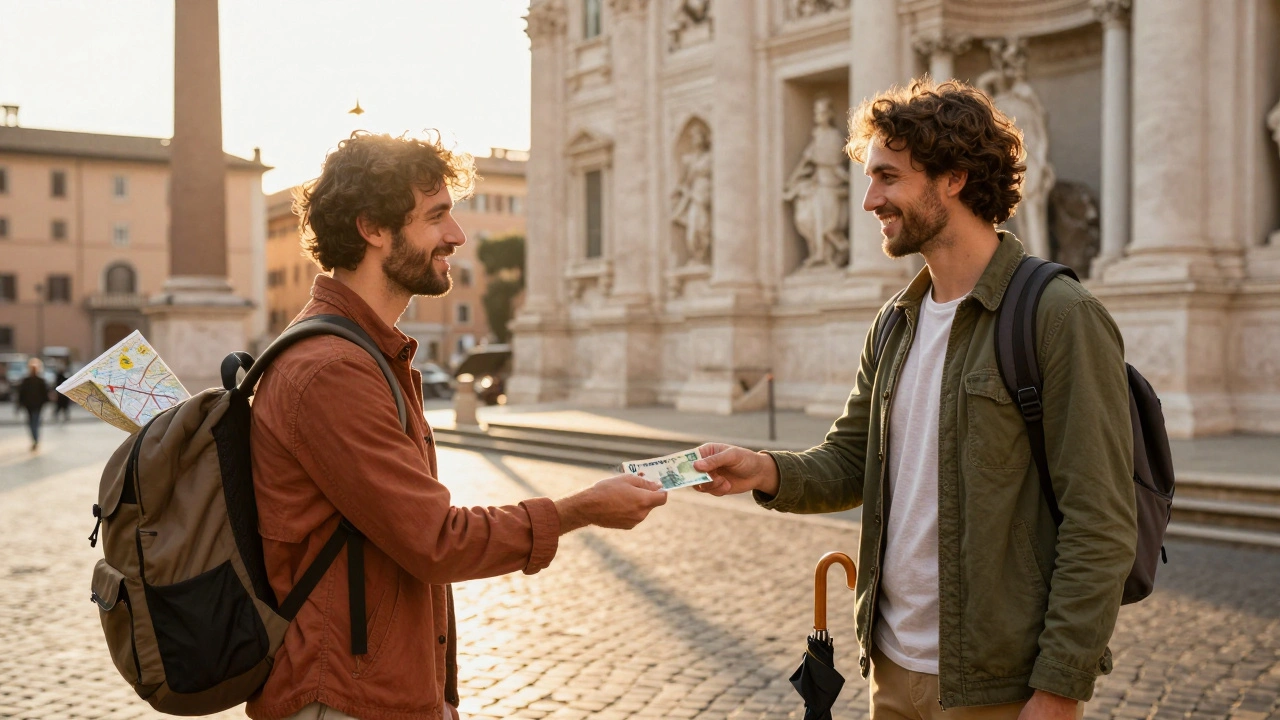
Traveling with a tour escort or local guide can turn a good trip into a great one. These professionals know the hidden alleys, the best times to visit landmarks, and how to avoid crowds that ruin photos. But when it’s time to leave, many travelers freeze up: how much should you tip? It’s not just about being polite-it’s about fairness, respect, and understanding local norms.
Why Tipping Matters for Tour Escorts and Local Guides
In many countries, tour guides and escorts don’t earn enough from their base salary to cover basic living costs. Tips aren’t optional extras-they’re often the main source of income. A guide in Rome might make $15 an hour before tips, but with tourists tipping well, their daily take-home can jump to $100 or more. In places like Egypt, Peru, or Thailand, guides rely on tips to feed their families, pay for transportation, or send their kids to school.
Tipping isn’t about charity. It’s compensation for knowledge, patience, and extra effort. A good guide remembers your dietary restrictions, finds you a quiet spot to take photos, stays late to help you catch a train, or translates a conversation with a street vendor. Those small acts add up-and they deserve recognition.
Standard Tipping Ranges by Region
Tipping norms vary wildly across the world. What’s generous in one country is insulting in another. Here’s what works right now in 2025:
- Western Europe (Italy, France, Spain): $5-$10 per person per day for a private guide. For group tours, $2-$5 per person per day is typical. If the guide went out of their way-like arranging a last-minute reservation or helping with lost luggage-add an extra $10.
- North America (USA, Canada): $10-$20 per person per day for private tours. Group tours: $5-$10 per person. In cities like New York or Chicago, where costs are high, $15-$25 is common for exceptional service.
- Asia (Thailand, Vietnam, Japan): $3-$8 per person per day. In Japan, tipping can be awkward-some guides will refuse cash outright. A small gift like local sweets or a nice pen is often better than money.
- Latin America (Mexico, Peru, Brazil): $5-$15 per person per day. In Peru, especially for Machu Picchu guides, $10-$20 is standard if they helped you navigate permits or climb steep trails.
- Middle East (Egypt, Jordan, UAE): $8-$20 per person per day. In Egypt, guides often work with drivers and interpreters. Tip the guide directly, then give the driver $3-$5 and the interpreter $2-$4 if they were helpful.
- Africa (Morocco, Kenya, South Africa): $7-$15 per person per day. In Kenya, safari guides often handle logistics, safety, and wildlife spotting. Tipping $15-$25 is not just appreciated-it’s expected.
Private vs. Group Tours: What’s Different?
Private tours are personalized. The guide is your full-time companion for the day. They adjust the pace, skip lines, and tailor the experience to your interests. That level of attention deserves a higher tip.
Group tours are more about logistics. The guide keeps everyone on schedule, explains history, and manages crowds. You’re one of 15-30 people. The tip should reflect that scale.
Here’s a quick rule: For private tours, tip 15-20% of the tour cost if it’s under $200. For tours over $200, stick to $20-$30 total. For group tours, multiply the daily rate by the number of people in your group. If you’re in a group of 8 and the standard is $5 per person, tip $40 total.
What If the Tour Is Free or Very Cheap?
You might join a "free walking tour" where you pay nothing upfront. That doesn’t mean the guide isn’t working. These tours operate on tips alone. Guides spend hours researching, rehearsing routes, and showing up rain or shine.
For free walking tours, tip $10-$20 per person depending on length and quality. A 2-hour tour? $10. A 4-hour deep dive into ancient ruins? $20-$25. If you’re unsure, ask yourself: Would I have paid for this? If yes, tip accordingly.

When to Tip: Cash, Card, or Gift?
Always carry small bills. Tipping with a $100 note is awkward-and often impossible. Guides rarely have change. Keep $1, $5, and $10 bills in a separate wallet or pouch.
Some tour companies allow tipping via credit card, but this often goes to the agency, not the guide. If you want to make sure your money reaches the person who earned it, give cash directly at the end of the tour.
In Japan, South Korea, or parts of the Middle East, a small gift can be more meaningful than cash. A box of chocolates, a local snack from home, or even a nice pen works. Just avoid giving money in envelopes in these places-it can feel impersonal or even rude.
What If You Didn’t Like the Service?
Not every guide is perfect. Maybe they were late, didn’t know the history well, or seemed disinterested. That doesn’t mean you should skip tipping entirely.
Even if the experience was underwhelming, leave at least $2-$5. It’s not about rewarding poor service-it’s about acknowledging the effort of showing up. If you’re really unhappy, say so politely. Many guides will ask for feedback and may improve for the next group.
Never tip with a frown or a grunt. That’s worse than not tipping at all. A simple "Thank you for your time" goes a long way.
Who Else Should You Tip on a Tour?
Don’t forget the support team. In many places, a tour includes:
- Driver: $3-$7 per day, depending on distance and conditions. In rough terrain or long drives, tip more.
- Interpreter or translator: $2-$5 per day if they helped you communicate with locals.
- Hotel concierge who arranged your tour: $5-$10 if they went beyond booking-like calling ahead to secure tickets or recommending a hidden café.
- Local artisans or vendors: No tip needed if you bought something. But if they gave you a free demo, taught you a phrase, or shared a story, leave a small coin or a few extra dollars.
These people are part of the experience too. A driver who waits for you in the heat, or a translator who stays late to help you order dinner-those moments matter.

Tipping Etiquette: What Not to Do
Some common mistakes can make tipping worse than not tipping at all:
- Don’t tip in foreign currency. A U.S. dollar means nothing to a guide in Hanoi. Use local money.
- Don’t tip with coins. Even in poor countries, coins feel dismissive. Use paper bills.
- Don’t tip in front of other tourists. It can make others feel pressured or awkward. Tip privately.
- Don’t wait until the last minute. If you’re leaving the next day, tip at the end of the tour. Waiting until the airport means the guide might not even get the money.
- Don’t assume everyone expects a tip. In some cultures, tipping is frowned upon. Research before you go.
How to Know If a Guide Is Professional
A good guide doesn’t just recite facts-they connect them to life. Look for these signs:
- They ask you what you’re interested in before starting.
- They adapt the pace based on your energy level.
- They share stories from their own life, not just textbook history.
- They know where to find clean restrooms, safe water, or quiet spots to sit.
- They don’t push you into gift shops or overpriced restaurants.
These are the guides worth tipping well. They turn sightseeing into understanding.
Tipping Beyond Money: The Real Impact
Money isn’t the only way to show appreciation. Write a quick review on Google or TripAdvisor. Mention the guide’s name. Say what they did well. That review might help them get more work next season.
Send a photo of you at a site they showed you, with a note: "Thanks for helping me see this." Many guides keep those messages for years.
When you tip with intention, you’re not just paying for a service. You’re honoring someone’s knowledge, culture, and humanity. And that’s worth more than any dollar amount.
Do I have to tip my tour guide?
No, tipping is never legally required. But in most countries, it’s culturally expected-and guides depend on it for their income. Skipping a tip can feel disrespectful, even if you didn’t mean it that way.
Should I tip more if the tour was free?
Yes. Free walking tours rely entirely on tips. Guides spend hours preparing and often work 6-7 days a week. A $10-$20 tip for a 2-4 hour tour is fair and appreciated.
Is it better to tip in cash or card?
Cash is best. Card tips often go to the company, not the guide. Even if the company says they pass it on, there’s no guarantee. Handing cash directly ensures the person who earned it gets it.
What if I’m on a tight budget?
Even $5 makes a difference. A guide in Thailand might earn $3 a day after expenses. A $5 tip can buy them lunch for a week. It’s not about how much you give-it’s that you noticed their effort.
Can I tip with a gift instead of money?
Yes, especially in places like Japan or South Korea where cash tipping is awkward. A small local treat from your home country, a notebook, or a nice pen works well. Avoid food if you’re unsure about dietary restrictions.
Should I tip the driver too?
Yes. Drivers often work longer hours than guides and handle safety, navigation, and delays. Tip $3-$7 per day, or more if the drive was long or difficult.