
When an older adult needs to travel for medical care-whether it’s a dialysis appointment across town, a specialist visit in another city, or a move to a new care facility-getting there safely isn’t just about booking a ride. It’s about managing medications, monitoring vital signs, handling mobility issues, and reducing anxiety in unfamiliar settings. That’s where medical escort services come in. These aren’t regular taxis or ride-shares. They’re trained professionals who provide medical support during non-emergency travel for seniors.
What Exactly Is a Medical Escort Service?
A medical escort service is a specialized transport option designed for seniors and others with chronic health conditions who need help moving between medical facilities, homes, or care centers. Unlike ambulance services, which handle emergencies, medical escorts focus on planned, non-urgent trips. Think of them as a mix between a personal care assistant and a medical monitor who travels with you.
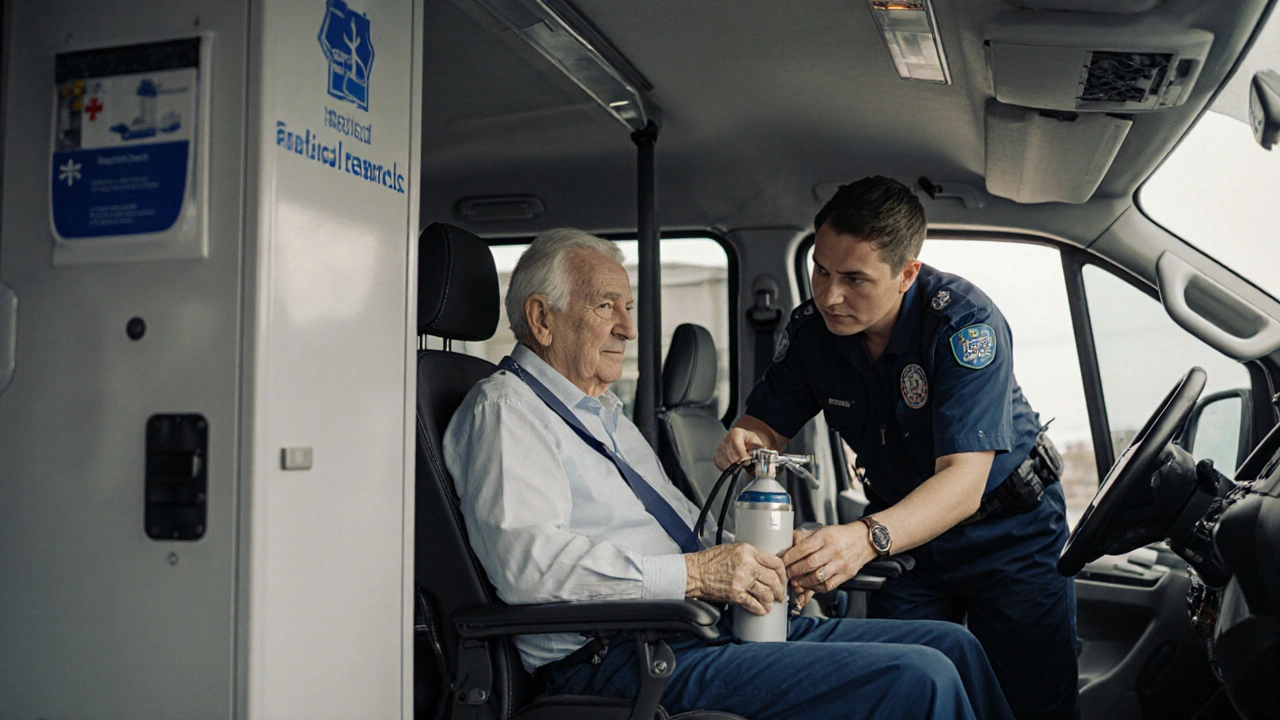
These services are often used by seniors recovering from surgery, those on regular dialysis, patients with dementia or mobility limitations, or older adults relocating to assisted living. The escort doesn’t just drive-they watch, assist, and respond. Many are certified nursing assistants (CNAs), paramedics, or trained medical transport specialists with experience in geriatric care.
Core Services Included in a Typical Medical Escort
Not all medical escort providers are the same, but most offer a standard set of services tailored to senior needs:
- Medication management: Escorts carry and administer prescribed medications on schedule. They track dosages, times, and any side effects during transit.
- Mobility assistance: Helping patients get in and out of vehicles, navigate stairs, or transfer from wheelchairs to gurneys. Many escorts are trained in safe lifting and use of transfer boards or slide sheets.
- Vital sign monitoring: Blood pressure, oxygen levels, heart rate, and glucose checks are often done before, during, and after transport-especially for patients with heart conditions or diabetes.
- Emotional support: Travel can be overwhelming for seniors with memory issues or anxiety. Escorts provide calm, reassuring presence, explain what’s happening, and help reduce fear.
- Communication with medical staff: Escorts often relay patient status updates to nurses or doctors at the destination. They may carry medical records or appointment details.
- Special equipment handling: Oxygen tanks, portable ventilators, catheters, and walkers are all transported and secured properly. Escorts know how to maintain airflow, prevent leaks, and avoid disconnections.
Some services even include post-transport assistance-like helping the patient settle into their room, ensuring they’ve eaten or taken their meds, or confirming they’re comfortable before leaving.
Who Typically Uses These Services?
Medical escort services aren’t just for people in wheelchairs. They’re for anyone who can’t safely manage travel alone due to medical conditions:
- Seniors with Alzheimer’s or dementia who get confused in new environments
- Patients undergoing weekly dialysis treatments who are too weak to travel independently
- Those recovering from hip or knee replacements who can’t bear weight
- Individuals with severe arthritis or balance issues
- People with respiratory conditions needing supplemental oxygen during travel
- Seniors being discharged from hospital to a rehab center or nursing home
Family members often arrange these services because they’re working, live far away, or simply don’t have the medical training to handle the trip safely. In Australia, over 60% of adults over 75 have at least one chronic condition that makes independent travel risky-making these services a practical necessity, not a luxury.
How Is It Different From a Taxi or Ride-Share?
Uber or a regular taxi might get someone from point A to point B-but they won’t help them stand up, check their blood sugar, or know what to do if they faint. Medical escorts are trained to handle medical emergencies that can arise during transit. A diabetic patient might go low on sugar. Someone on blood thinners might start bleeding internally. An elderly person with COPD might struggle to breathe in a hot car.
Medical escort vehicles are also equipped differently:
- They have secure anchor points for oxygen tanks and mobility aids
- They’re fitted with medical-grade seating and reclining options
- They carry first-aid kits, glucose monitors, suction devices, and sometimes portable ECG units
- Drivers are trained in CPR and basic life support
Regular drivers aren’t required to have medical certifications. Medical escorts are.
Cost and Insurance Coverage
Costs vary depending on distance, duration, and level of care needed. In Australia, a local trip (under 20 km) with basic assistance typically runs between $80 and $150. Longer trips, overnight escorts, or those requiring advanced medical monitoring can cost $250 or more.
Medicare doesn’t cover non-emergency medical transport-but some private health insurers do, especially if the trip is pre-approved by a doctor. Veterans Affairs Australia (DVA) often covers these services for eligible veterans. Private long-term care insurance policies may include transport as a benefit. It’s always worth checking with your insurer before booking.
Some local councils and aged care providers also offer subsidized transport for seniors on low incomes. In Perth, programs like Community Transport WA and Seniors Card Transport Concessions can reduce costs significantly.
How to Choose a Reliable Provider
Not all companies are created equal. Here’s what to look for:
- Staff qualifications: Are drivers CNAs, paramedics, or trained in geriatric care? Ask for certifications.
- Vehicle standards: Do they have medical-grade equipment? Are vehicles regularly cleaned and maintained?
- Background checks: All staff should have a current police clearance and working with children/aged care check.
- 24/7 availability: Medical needs don’t follow a 9-to-5 schedule. Can they respond to last-minute changes?
- References and reviews: Ask for feedback from other families or care coordinators.
- Communication protocol: Will they call you before and after the trip? Do they send a written report?
Red flags: companies that only offer a phone number with no website, no staff bios, or refuse to provide service details in writing.
Real-Life Example: A Trip to the Specialist
Marjorie, 82, lives in Subiaco and needs to see a cardiologist in Fremantle every three weeks. She has congestive heart failure and uses oxygen. Her daughter lives in Adelaide and can’t make the trip. Her GP recommended a medical escort service.
The escort arrived 15 minutes early, checked Marjorie’s oxygen levels, and made sure her tank was full. They helped her into the van, secured her wheelchair, and monitored her vitals during the 45-minute drive. When they arrived, the escort walked her to the clinic, confirmed her appointment time, and gave the receptionist a quick update on her condition. After the appointment, they returned her home, helped her take her afternoon meds, and sent a text to her daughter: “Marjorie did well. BP stable. Oxygen sat 94%.”
That’s the difference.

When to Start Planning
Don’t wait until the day of the appointment. Medical escort services often need 24-48 hours’ notice, especially for longer trips or those requiring special equipment. If your loved one is scheduled for regular treatments, set up a recurring booking. Many providers offer monthly packages at a discount.
Also, talk to their doctor. Many will write a letter of medical necessity, which can help with insurance claims or accessing government subsidies.
What’s Not Included
It’s important to know the limits:
- Medical escorts don’t provide 24/7 nursing care
- They don’t perform surgeries or emergency interventions
- They can’t change IV lines or adjust ventilator settings
- They’re not responsible for personal care like bathing or dressing unless specifically arranged
If you need ongoing care at the destination, you’ll need to arrange for a home care worker or nurse to meet them there.
Are medical escort services only for seniors?
No. While seniors are the most common users, these services are also available for younger adults with disabilities, chronic illnesses, or recovery needs. Anyone who requires medical support during travel can qualify.
Can I use a medical escort for international travel?
Yes, but it’s more complex. Some providers offer international medical escort services for patients traveling overseas for treatment. These require coordination with airlines, customs, and foreign medical teams. The escort must carry appropriate documentation, and the patient’s condition must be stable enough for air travel. Costs are significantly higher and require advance planning.
Do medical escorts help with hospital discharge?
Absolutely. Many hospitals partner with medical escort services to safely transport patients to rehab centers, nursing homes, or their own homes after discharge. The escort often coordinates with discharge planners and ensures medications and equipment are transferred correctly.
Is medical escort covered by Medicare?
Medicare in Australia does not cover non-emergency medical transport. However, some private health insurers, DVA, or state-based aged care programs may provide partial or full coverage. Always check with your provider before booking.
How far in advance should I book a medical escort?
For local trips, 24-48 hours is usually enough. For longer distances, specialized equipment, or international travel, book at least a week in advance. Recurring appointments (like weekly dialysis) can be scheduled monthly to ensure consistency and often get discounted rates.
Next Steps If You’re Considering This Service
Start by talking to your loved one’s doctor or care coordinator. Ask for recommendations. Check with your local council or Aged Care Assessment Team (ACAT) for subsidized options. Call at least two providers and ask the same questions: What certifications do your staff have? What equipment do you bring? Can I see a sample report after a trip?
Don’t assume it’s too expensive or too complicated. Many families find that once they use a medical escort service, they wonder how they ever managed without it. For seniors, it’s not just about getting from one place to another-it’s about dignity, safety, and peace of mind.