
Getting to a doctor’s appointment shouldn’t feel like a battle. For many people who use wheelchairs or have limited mobility, simply stepping out the front door can be the hardest part of the day. Clinics aren’t always built for easy access, parking is tight, hallways are narrow, and staff might not know how to help. That’s where medical escort services step in-not just to push a wheelchair, but to make sure someone gets to their appointment safely, on time, and with dignity.
What Medical Escort Services Actually Do
Medical escort services aren’t taxi drivers with a stretcher. They’re trained professionals who understand medical needs, patient anxiety, and the physical challenges of moving through healthcare environments. Their job includes more than just transporting someone from point A to point B. They help with transfers from bed to wheelchair, navigate ramps and elevators, communicate with clinic staff about mobility needs, and stay with the patient until they’re safely settled in the exam room.
Imagine someone with spinal cord injury trying to get from their home to a specialist clinic. They can’t walk. Their wheelchair is heavy. The bus doesn’t have a ramp. Their family works during the day. Without an escort, they might miss their appointment-or worse, get hurt trying to manage alone. A trained escort knows how to lock wheels properly, how to tilt a chair safely on uneven ground, and how to ask the clinic receptionist for a quiet waiting area if the patient is sensitive to noise.
Why Clinics Struggle to Provide This Support
Most clinics want to help. But they’re stretched thin. Nurses are busy with appointments. Receptionists handle billing and scheduling. Security staff aren’t trained in mobility aid handling. Even when a clinic has a ramp or an accessible bathroom, they don’t always have staff who know how to assist someone in a wheelchair safely.
Studies show that over 60% of patients with mobility impairments report delays or difficulties getting care simply because they couldn’t get from their vehicle to the exam room without help. That’s not a lack of care-it’s a gap in systems. Medical escort services fill that gap by bringing specialized skills that clinics can’t always afford to hire full-time.
How These Services Work at the Clinic Level
When a patient books a medical escort service, the process is simple:
- The service receives the appointment details-clinic name, time, patient’s mobility level, and any special needs.
- A trained escort arrives at the patient’s home or care facility in a vehicle equipped with a ramp or lift and a secure wheelchair tie-down system.
- They help the patient transfer safely into the wheelchair, if needed, and check for comfort and safety before leaving.
- At the clinic, they escort the patient through the entrance, wait in line if needed, and hand off to clinic staff with a quick summary of the patient’s needs.
- After the appointment, they return the patient home or to their next destination, ensuring no rush or stress.
This isn’t just about convenience. It’s about reducing risk. Falls during transfers are a leading cause of injury among older adults and people with disabilities. A trained escort reduces that risk by using proper lifting techniques and equipment designed for medical transfers.
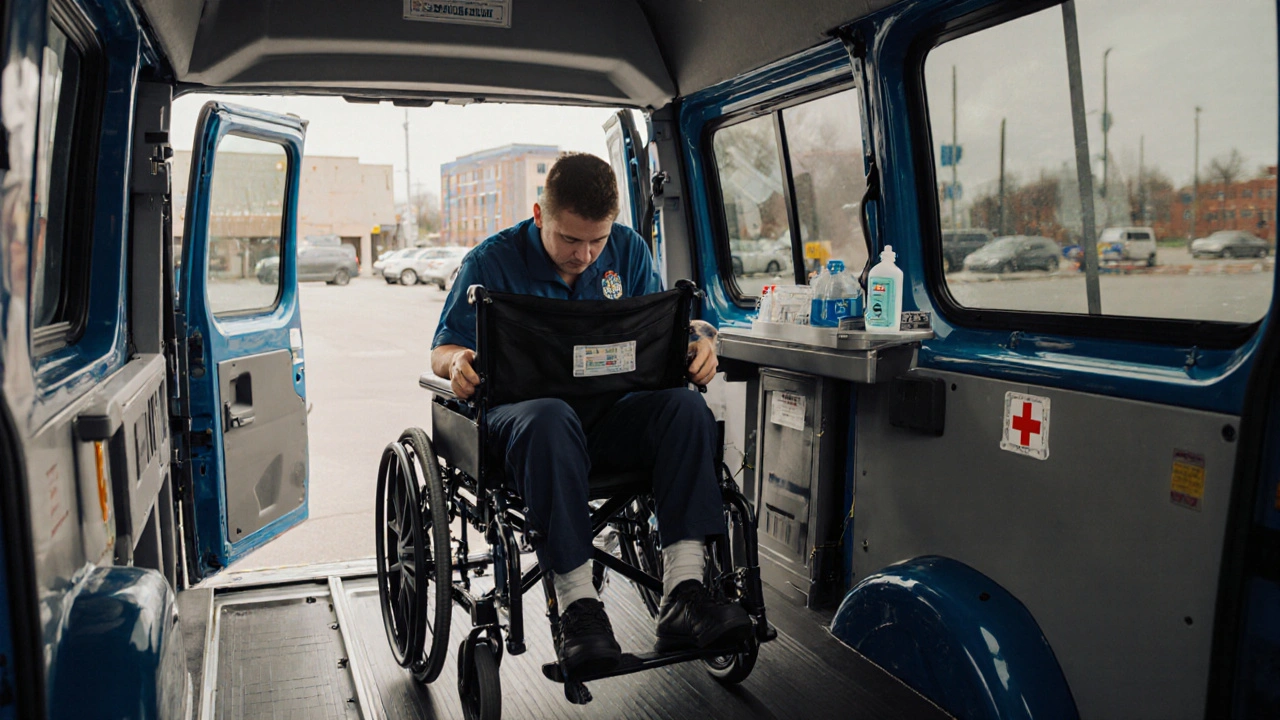
Who Benefits Most From These Services?
It’s not just people in wheelchairs. People recovering from surgery, those with severe arthritis, neurological conditions like MS or Parkinson’s, and even elderly patients who can’t walk far without getting dizzy or fatigued all benefit. One 78-year-old woman in Perth, recovering from hip replacement, told her escort: "I didn’t miss a single appointment for six months because I knew someone would be there to help me walk-and to make sure no one rushed me."
These services also help caregivers. A daughter working two jobs can’t take time off for every doctor’s visit. A spouse with dementia can’t navigate a clinic alone. Medical escorts give families peace of mind-knowing their loved one is in safe hands.
What to Look for in a Medical Escort Service
Not all services are the same. Here’s what matters:
- Training: Do they have certification in patient handling? Are they trained in infection control and basic first aid?
- Equipment: Do they use medical-grade wheelchairs with safety belts and anti-tip devices? Is their vehicle ADA-compliant or equivalent?
- Communication: Can they speak with clinic staff clearly about the patient’s needs? Do they provide written handover notes?
- Reliability: Do they show up on time? Do they call if there’s a delay?
- Insurance & Coverage: Some services accept Medicare, Medicaid, or private insurance. Others work with NDIS in Australia. Always ask.
Watch out for services that only offer rides without any medical training. Pushing a wheelchair isn’t the same as supporting someone with spasticity, contractures, or cognitive impairment. The right escort knows how to adjust speed, handle sudden movements, and recognize signs of distress.

How to Arrange a Medical Escort
It’s easier than you think:
- Ask your clinic if they partner with a medical escort service. Many hospitals and specialist centers have a list.
- If not, search for local services with "medical escort" or "patient transport" in their name. Check reviews for mentions of wheelchair assistance.
- Call and ask about their process. A good service will ask you questions first-about your mobility, your appointment, your needs.
- Book in advance. Most services require at least 24 hours’ notice, especially for early morning or weekend appointments.
- Confirm the day before. Set a reminder to call and double-check the time and pickup location.
Some community health centers offer free or low-cost transport for eligible patients. In Australia, NDIS participants can use their plan funding for medical escort services. Contact your local Area Coordinator to find out what’s covered.
The Bigger Picture: Accessibility Isn’t Just a Ramp
Having a ramp at the clinic entrance doesn’t mean someone can get care. Accessibility is about the whole journey-from the front door to the exam table, from the parking lot to the waiting room. Medical escort services are a critical part of that chain.
When patients miss appointments because they can’t get inside, it leads to worsening conditions, emergency visits, and higher costs. These services aren’t a luxury-they’re a necessary part of healthcare equity. They ensure that mobility limitations don’t become barriers to treatment.
Every person deserves to walk (or roll) into a clinic without fear, without helplessness, without having to beg for help. Medical escort services make that possible.
Are medical escort services covered by insurance?
Some are. In Australia, NDIS participants can use plan funding for transport to medical appointments. Medicare doesn’t typically cover non-emergency transport, but Medicaid in the U.S. often does. Private health insurers sometimes offer transport benefits as part of extras cover. Always ask the service provider for documentation you can submit to your insurer.
Can I use a regular taxi instead?
Some taxis have wheelchair access, but they rarely have trained staff. A regular driver might not know how to safely transfer someone from a bed to a wheelchair, or how to handle a patient with spasticity. Medical escorts are trained in patient handling, infection control, and communication with healthcare staff-skills most taxi drivers don’t have.
Do medical escorts stay with me during my appointment?
It depends on your needs and the service. Most escorts will stay with you until you’re settled in the exam room and then wait nearby. Some offer to stay the entire time if you have cognitive impairments or anxiety. Others will return at a pre-arranged time. Always clarify this when booking.
What if I need help going to the bathroom at the clinic?
Trained escorts can assist with transfers to and from accessible bathrooms, if needed. They’ll help you to the door and wait outside unless you request more support. Always let the service know in advance if you’ll need bathroom assistance-it helps them prepare the right equipment and time their schedule.
How far in advance should I book?
At least 24 hours ahead is standard. For weekend or early morning appointments, book 48 hours in advance. Last-minute requests may be possible, but they’re not guaranteed. Planning ahead ensures the right escort with the right vehicle is assigned to you.